Every town has that one person everyone seems to know. Say their name, and someone immediately has a story, a memory, or a connection.
For the SC Lowcountry, that person is Pat Conroy.
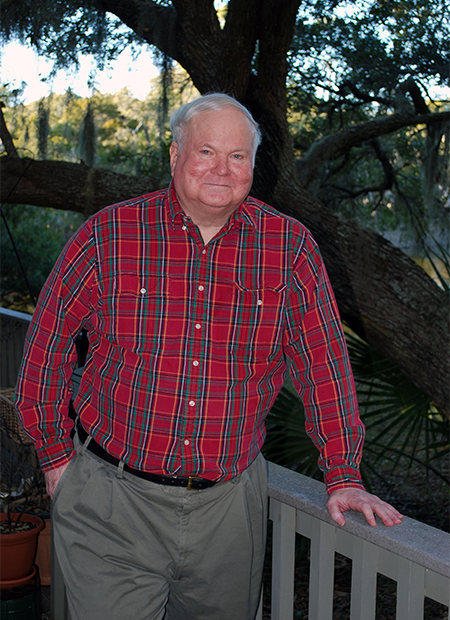
Ask about this Lowcountry legend and you’ll find devoted readers who have read everything he wrote. Then you’ll find people like me, people who have heard of him, know his name, and know he was an important part of the Lowcountry, but haven’t actually read a single one of his novels.
But you don’t have to be a longtime Conroy reader to find a connection to him. You can visit the places he called home, taught in, wrote about, and loved.
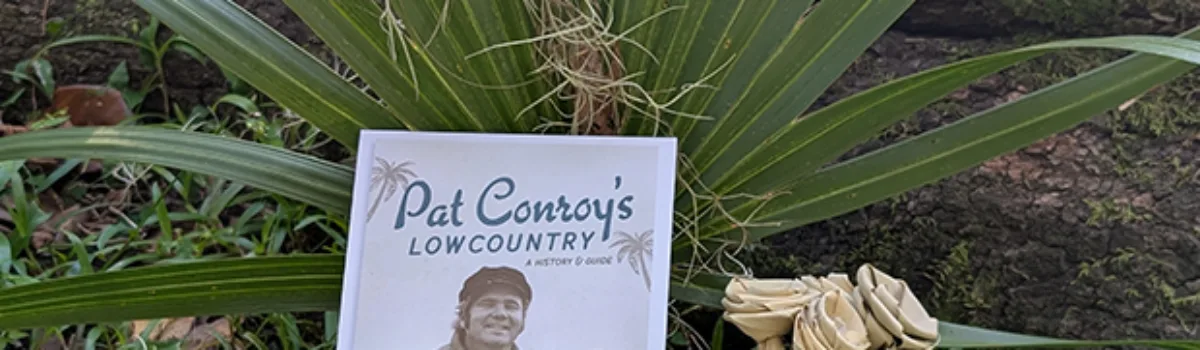
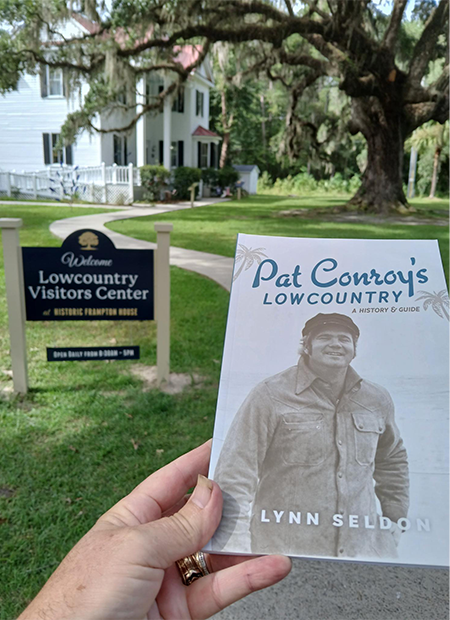
Local author Lynn Seldon has set out to explore those places in his new book, Pat Conroy’s Lowcountry: A History & Guide. The book takes readers through the landscapes, communities, and experiences that shaped Conroy’s life and writing.
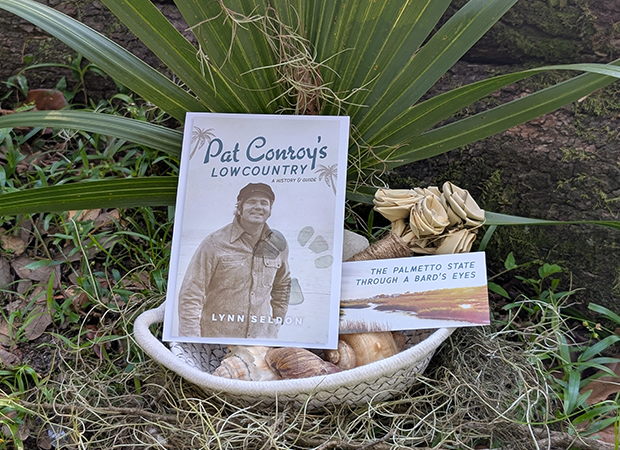
I recently sat down with Lynn to learn more about Pat Conroy, the places that shaped his work, and what makes both Conroy and the Lowcountry so special.
Who is Pat Conroy?
Pat Conroy is the famous author of novels such as The Prince of Tides, The Water Is Wide, and Beach Music. The son of a Marine officer and a Southern belle from Alabama, Conroy moved frequently with his family before they eventually settled in Beaufort, South Carolina, where he attended Beaufort High School.
Conroy later attended The Citadel in Charleston, where his love of writing flourished and his writing career began to take shape. His first published book, The Boo, came out in 1970.
I’ve never read Pat Conroy. What novel should I read first?
For those who have never read any of Pat’s works, I asked Lynn which novel someone should start with. His response was simple: “It depends on what you like.”
But two novels immediately came to mind: The Prince of Tides and Beach Music.
Then Lynn read me a passage from The Prince of Tides, and suddenly I understood why he had suggested it.
“To describe our growing up in the lowcountry of South Carolina, I would have to take you to the marsh on a spring day, flush the great blue heron from its silent occupation, scatter marsh hens as we sink to our knees in mud, open you an oyster with a pocketknife and feed it to you from the shell and say, ‘There. That taste. That’s the taste of my childhood.’ I would say, ‘Breathe deeply,’ and you would breathe and remember that smell for the rest of your life, the bold, fecund aroma of the tidal marsh, exquisite and sensual, the smell of the South in heat, a smell like new milk, semen, and spilled wine, all perfumed with seawater. My soul grazes like a lamb on the beauty of indrawn tides.”
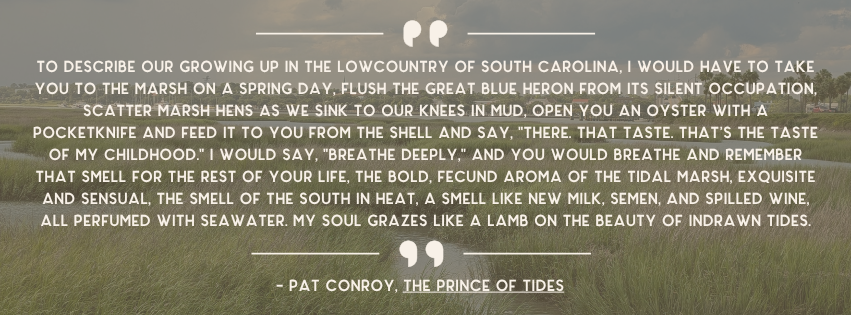
From Lynn’s reading, you can hear how Conroy used words to bring the Lowcountry to life. The marsh, the oysters, the smell of the tidal water. It isn’t simply a description of a place. It is a memory tied to a place.
But you don’t have to read Conroy’s novels to get introduced to him. Lynn suggested “speed dating”. By that, he means watching one of the movie adaptations of his work, including The Prince of Tides, The Water Is Wide, or Conrack.
Another way to experience Conroy’s work is through two audiobooks he recorded, My Reading Life and Pat Conroy’s Cookbook. Yes, an audiobook of a cookbook sounds a little odd, but don’t worry. He doesn’t read the recipes. Instead, he tells the stories behind them.
One of Lynn’s favorite stories from Pat Conroy’s Cookbook is about pickled shrimp. Pat said that if a good friend dies, he took two pounds of pickled shrimp to the mourners, and if a great friend dies he took five pounds.
But Pat said, “When I die, I fully expect all the shrimp in Beaufort to be pickled that day.”
What is Pat Conroy’s Lowcountry all about?
In Lynn Seldon’s upcoming book, Pat Conroy’s Lowcountry: A History & Guide, readers follow Conroy through the places, people, and experiences that shaped his life and his writing. From Beaufort and Fripp Island to St. Helena and Daufuskie Island, the book explores the Lowcountry he knew and loved, along with the places beyond South Carolina that became part of his story.
You can follow Conroy’s path to The Citadel, where he was a cadet and later drew on his experiences for The Lords of Discipline. On Daufuskie Island, where he taught at the Mary Field School, you can trace the experiences that became the basis for his memoir The Water Is Wide. On St. Helena Island, his connection to the Penn Center adds another chapter to his Lowcountry story.
And, of course, there is Beaufort.
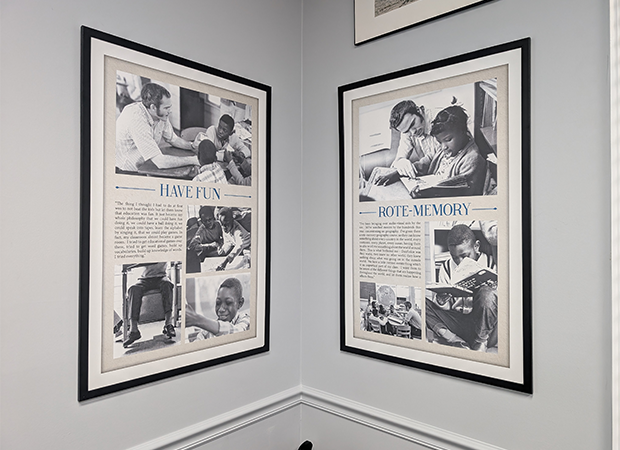
Here you can visit the Pat Conroy Literary Center, where his life and legacy are preserved through photographs, manuscripts, books, and personal artifacts. You can even sit at the desk where he wrote several of his novels.
Pat Conroy Literary Center
As someone who has never read any of Pat’s books, I visited the Pat Conroy Literary Center. It is a wonderful place to encounter the person behind the books.

You can see memorabilia from his life and sit at the desk where he handwrote several of his novels. In fact, Conroy wrote all of his novels with pen and paper. The exhibits also take you through his time on Daufuskie Island, including conversations with some of the students he taught there. Along the way, you’ll find handwritten letters, old yearbooks, family photographs, and a selection of books from his personal library.
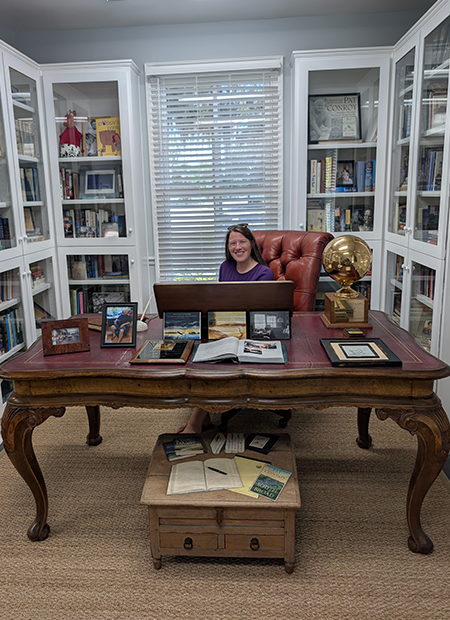
One of the docents I met there was Pat’s sister. Her stories and memories drew me further into his life. You can tell how deeply she loved her brother and how much she wants to keep his legacy alive for generations to come.
Lynn Remembers Pat
Lynn remembers first meeting Pat for lunch in Charleston at Slightly North of Broad. Their lunch was only supposed to last two hours, but when those two hours were up, Cassandra, Pat’s wife, reminded them that it was time to wrap things up. But Pat wasn’t ready to end the conversation. He invited Lynn back to their hotel, and they continued talking for another three hours.
Lynn also met Pat at an author’s luncheon at Griffin Market in Beaufort. Griffin Market has since closed, but the location lives on as Sister Sister Deli & Market. Whenever Lynn visits, he orders Italian as a reminder of that luncheon with Pat.

One of Lynn’s final memories of Pat is bittersweet. For Pat’s 70th birthday, friends and family gathered for a big celebration at the Beaufort Arsenal. Afterward, Pat invited Lynn to his home for a family after-party. Just four months later, Pat passed away.
But Lynn’s memories of Pat don’t end there. He continues to revisit the places, stories, and moments that shaped Conroy’s life in Pat Conroy’s Lowcountry: A History & Guide.
How do I Get a Copy of Pat Conroy’s Lowcountry?
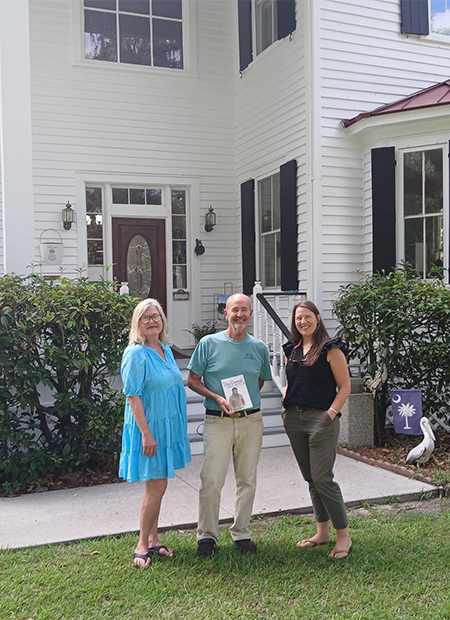
Lynn’s book comes out September 29, 2026. You can preorder his book at the SC Lowcountry Visitor Center at the Historic Frampton Plantation House or you can attend the book launch and celebration October 1, 2026 from 4-6 pm at the Pat Conroy Literary Center. Bites from Conroy’s cookbook will be served, including the infamous pickled shrimp.
Keelie Robinson
As an avid outdoorswoman, I love hiking, camping, kayaking, boating, and traveling.
Come along and we’ll explore this region, south of Charleston and north of Savannah,
to find what makes the SC Lowcountry NATURALLY AMAZING!