Can You Speak Lowcountry? A Local’s Guide to SC Lowcountry Pronunciations

You’re driving through the SC Lowcountry and see a sign for Coosawhatchie. You think to yourself, How in the world do you pronounce that? If KOO-suh-WAHTCH-ee was your first instinct, you are not alone! It’s one of our most mispronounced places, along with Daufuskie, Okatie, and Pocotaligo. But don’t worry, we’re here to help you say them like a local and give you a little backstory and fun things to do along the way. So, keep reading to discover more of the SC Lowcountry and how to say Coosawhatchie like you grew up on the banks of its river!
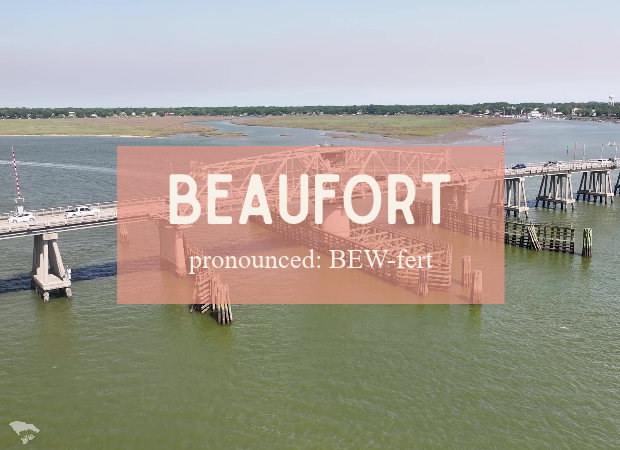
Image of the Woods Memorial Bridge in Beaufort, South Carolina with text overaly saying, "Beaufort, pronounced: BEW-fert."

Beaufort

Pronunciation: BEW-fert

Did you know there are two Beauforts in the Carolinas? In South Carolina, it’s BEW-fert, while our neighbors to the north say BOH-fert. Locals will politely set you straight, but now you won’t need them to.

Beaufort takes its name from Henry Somerset, Duke of Beaufort, one of the Lords Proprietors of the Carolina Colony. Founded in 1711, Beaufort is the second-oldest city in South Carolina.

Want to dig deeper into those 300-plus years of history? Stop by the Beaufort History Museum, housed in the historic Beaufort Arsenal on Craven Street.
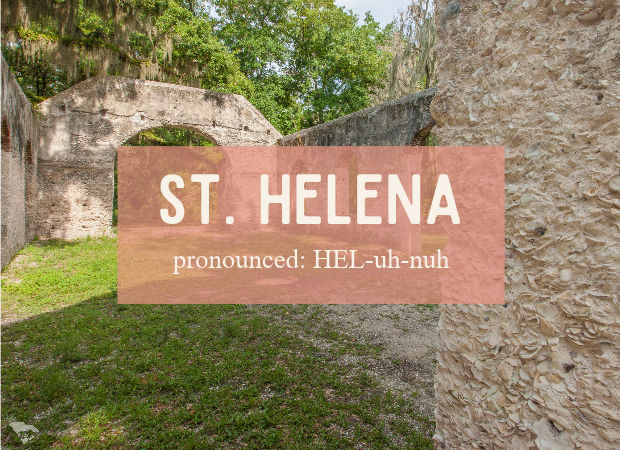
Image of the St. Helena Chapel of Ease on St. Helena Island, South Carolina with the text overlay saying, "St. Helena pronounced: HEL-uh-nuh.

Saint Helena Island

Pronunciation: Saint HEL-uh-nuh Island

The name Saint Helena is derived from Santa Elena, a Spanish settlement in 1566 on present-day Parris Island that served as the capital of Spanish Florida.

Today, Saint Helena Island is known for its rich Gullah Geechee heritage, which helped inspire the beloved 1990s children’s television show Gullah Gullah Island. The show’s stars and cultural advisors, Ron and Natalie Daise, lived on Saint Helena Island, and Ron grew up here. Drawing on their own experiences and the island’s culture, they helped bring the show to life.

To learn more about Gullah Geechee heritage, stop by Penn Center, founded in 1862 as one of the first schools in the South for formerly enslaved people.
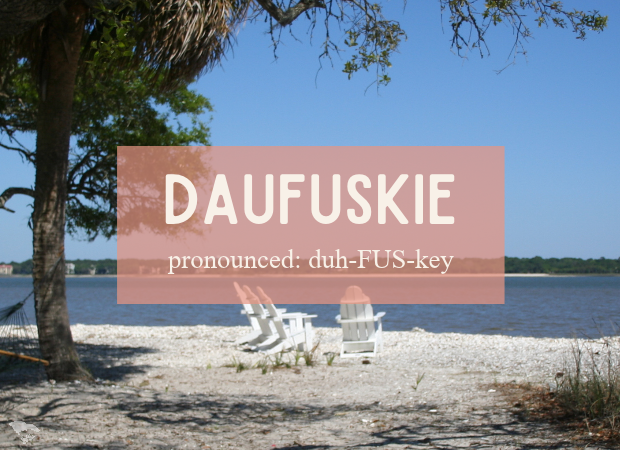
Image of a beach with adirondack chairs on Daufuskie Island with text overlay staying, "Daufuskie, pronounced: du-FUS-key."

Daufuskie Island

Pronunciation: duh-FUS-key Island

There are several stories about how Daufuskie got its name, but South Carolina historians trace it to the Creek Indians and a word meaning “land with a point.”

Part of what makes Daufuskie so distinctive is its separation from the mainland. You can only reach the island by ferry or private boat, and that relative isolation helped generations of island residents preserve their Gullah Geechee traditions.

Meander along the Rob Kennedy Historic Trail to learn more about the island’s history. And if you’re a Pat Conroy fan, you can stop by the Mary Field School, where he taught the local children. His time there inspired his book The Water Is Wide.
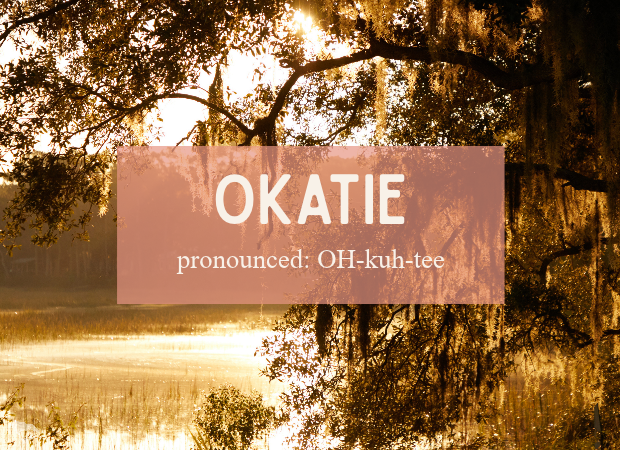
Image of a sunlit river and trees with text overlay saying, "Okatie, pronounced: OH-kuh-tee."

Okatie

Pronunciation: OH-kuh-tee

Okatie comes from the Okatie Indian tribe, a name said to mean “quiet waters.”

Today the waters may be quiet, but Okatie is a bustling community between Beaufort and Bluffton. Stop by the Port Royal Sound Foundation Maritime Center to see exhibits featuring live animals. Or take part in one of its hands-on programs to learn about the Port Royal Sound.
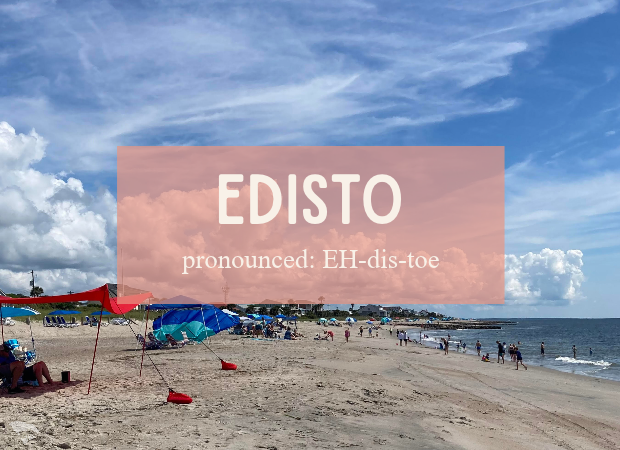
Image of people on Edisto Beach, South Carolina with text overlay saying, "Edisto, pronounced: EH-dis-toe."

Edisto

Pronunciation: EH-dis-toe

Edisto is named after the Edisto Indians, a sub-tribe of the Cusabo.

While driving on SC Highway 174 toward Edisto Beach, you start to notice something. Everything slows down. Not just the traffic, but your state of mind. By the time you unpack and head to the beach, you realize that you’ve left all your cares at the bridge.

The beach is perfect for shelling and hunting for shark teeth. But if adventure is calling your name, head inland to canoe or kayak the Edisto River, the longest free-flowing blackwater river in North America. Need help planning your route? Check out the Edisto River Canoe and Kayak Trail for maps and helpful resources.
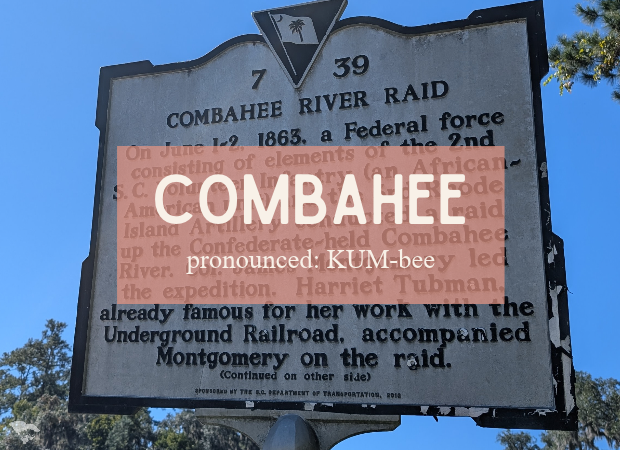
Image of the Combahee River Raid historical marker in Colleton County, South Carolina, with text overlay saying, "Combahee, pronounced: KUM-bee."

Combahee

Pronunciation: KUM-bee

Combahee is named for the Combahee, another sub-tribe of the Cusabo. And how do locals say it? Just like the Gullah do: Combee.

The Combahee River Raid took place on the night of June 1–2, 1863. Working with Colonel James Montgomery, Harriet Tubman led a covert mission up the river with soldiers from the 2nd S.C. Volunteer Infantry (an African American unit) and the 3rd Rhode Island Artillery. Using intelligence she had gathered from enslaved people along the river, Tubman guided Union gunboats past Confederate defenses to free more than 700 enslaved people. Learn more about this historic event in the book COMBEE: Harriet Tubman, the Combahee River Raid, and Black Freedom during the Civil War by Pulitzer Prize winner Edda L. Fields-Black.

Launch a boat or kayak at Steel Bridge Boat Landing, located near the Harriet Tubman Bridge on US Highway 17, to navigate these historic waters.
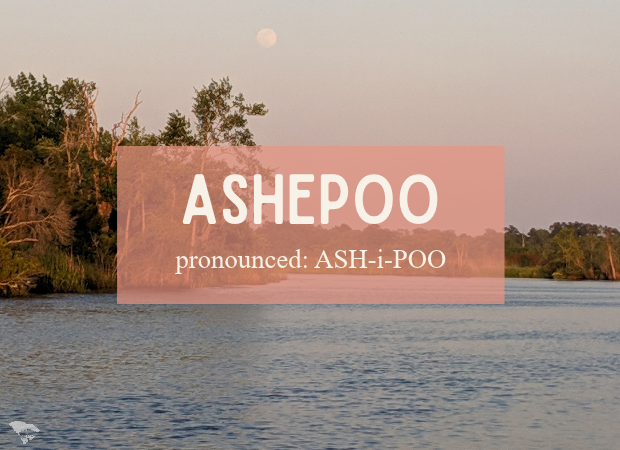
Image of the Ashepoo River in Colleton County, South Carolina, with text overlay saying, "Ashepoo, pronounced: ASH-i-POO

Ashepoo

Pronunciation: ASH-i-POO

Ashepoo is named for the Ashepoo, another sub-tribe of the Cusabo, alongside the Edisto and Combahee.

The Ashepoo River is part of the ACE Basin, a 1.6-million-acre watershed formed by the Ashepoo, Combahee, and Edisto rivers. Recognized as “One of the Last Great Places” by the Nature Conservancy, the ACE Basin protects former rice fields, tidal marshes, and wetlands that provide vital habitat for waterfowl, migratory birds, and endangered species.

Nature enthusiasts, grab your binoculars and head out to Ernest F. Hollings ACE Basin National Wildlife Refuge, Bear Island Wildlife Management Area, or Donnelley Wildlife Management Area for birdwatching and wildlife viewing. And keep an eye out for a reptile or two along the way.
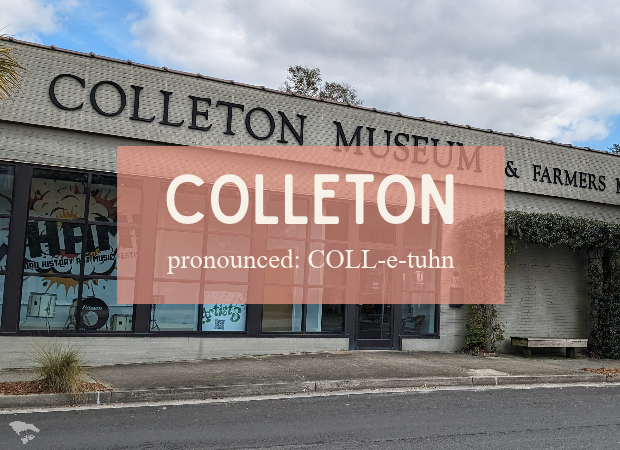
Image of the front facade of the Colleton Museum and Farmers Market in Walterboro, South Carolina with the text overlay saying, "Colleton, pronounced: COLL-e-tuhn."

Colleton

Pronunciation: COLL-e-tuhn

Colleton is named after Sir John Colleton, one of the Lords Proprietors, and dates to 1682, when it was one of three original counties.

Present-day Colleton County celebrates its rice-growing history, heritage, and traditions every April. The Colleton County Rice Festival in Walterboro brings friends and families together for a week of entertainment, fun, and RICE! The Walterboro Civitans cook up the World’s Largest Pot of Rice.

Looking to learn more about the area? Stop by the Colleton Museum and Farmers Market.
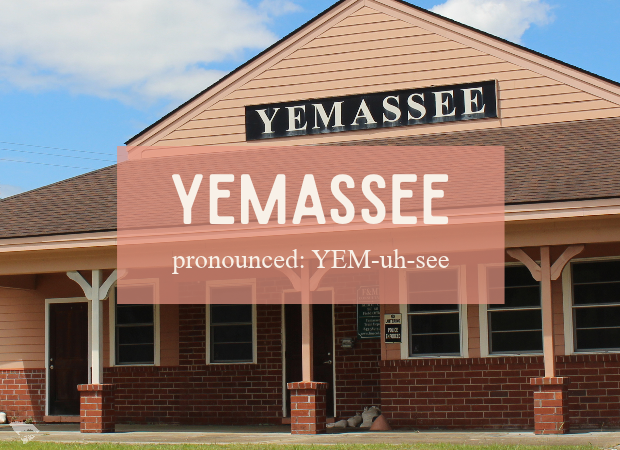
Image of the train depot in Yemassee, South Carolina with text overlay saying, "Yemassee, pronounced: YEM-uh-see."

Yemassee

Pronunciation: YEM-uh-see

Yemassee takes its name from the Yamasee Indians, but did you know the town of Yemassee was the first stop for Parris Island recruits? From 1915 until 1965, more than 500,000 recruits passed through the Yemassee depot on their journey to becoming United States Marines. Stop by Barracks Antique Mall and see where the recruits stayed before continuing to Parris Island.
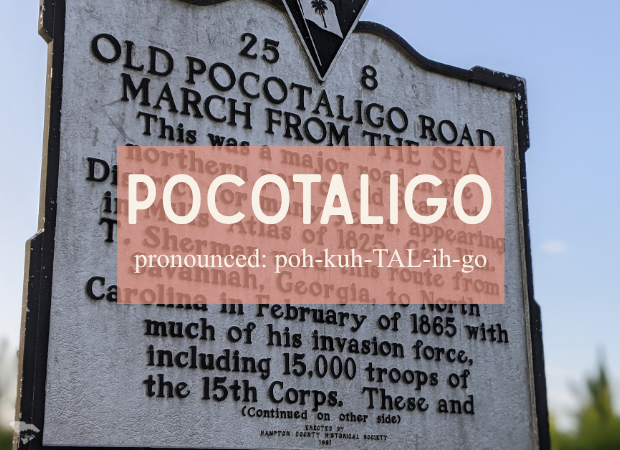
Image of a historical marker about Old Pocotaligo Road in Hampton County, South Carolina, with text overlay saying, "Pocotaligo, pronounced: poh-kuh-TAL-ih-go."

Pocotaligo

Pronunciation: poh-kuh-TAL-ih-go

Pocotaligo was the principal town of the Yamasee Indians. During colonial times, the Yamasee traded with the colonists, but growing tensions over abuse, mounting debts, and the threat of enslavement eventually led to conflict. On Good Friday, April 15, 1715, the Yamasee launched an attack at Pocotaligo and the Yamasee War began. The uprising shocked South Carolinians who had considered the Yamasee close allies. The war continued until 1717.

To learn more about the Yamasee War and the SC Lowcountry, stop by the Lowcountry Visitor Center at the Historic Frampton House.
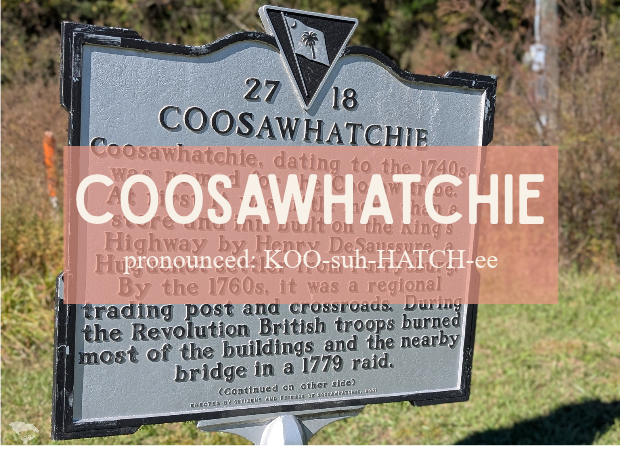
Image of a historical marker in the Coosawhatchie, South Carolina community with text overlay saying, "Coosawhatchie, pronounced: KOO-suh-HATCH-ee."

Coosawhatchie

Pronunciation: KOO-suh-HATCH-ee

The community of Coosawhatchie got its name from the Coosaw Indians, another sub-tribe of the Cusabo.

The nearby Coosawhatchie River has seen history unfold along its banks. After the Revolutionary War, Coosawhatchie served as the capital of Beaufort District for nearly fifty years. During the Civil War, General Robert E. Lee set up headquarters here for the Confederate Department of South Carolina and Georgia.

Today, the river still carries the name of the community where so much history unfolded. And now that you know how to pronounce Coosawhatchie, you’re one step closer to sounding like a local!
Tree lined road with text overlay saying, "Can you speak Lowcountry?"

So, how did you do? Could you pronounce them all correctly, or are there a few you’ll need to practice? Keep this guide handy on your next visit to the SC Lowcountry and get ready to put your new knowledge to the test! And when you spot Coosawhatchie on a sign, remember: it’s HATCH, not WATCH!
keelie_robinson_sc_lowcountry_tourism_commission.v6

Keelie Robinson

As an avid outdoorswoman, I love hiking, camping, kayaking, boating, and traveling.
Come along and we’ll explore this region, south of Charleston and north of Savannah,
to find what makes the SC Lowcountry NATURALLY AMAZING!


See what our visitors love about the
SOUTH CAROLINA LOWCOUNTRY

Use the #hashtag #sclowcountry to get your image featured!

The Lowcountry & Resort Islands Region of South Carolina includes the four, southern-most counties in the state, Beaufort, Jasper, Hampton, and Colleton, which are bordered on the east by the Atlantic Ocean and on the west by the Savannah River and the state of Georgia.


#gailannlovinthedrive #huntingisland #sclowcountry #atlanticocean
Black-bellied Whistling Duck #blackbelliedwhistlingduck #birds #birdsofinstagram #birdphotography #wildlife #nature #sclowcountry #magnoliaplantation #magnoliaplantationandgardens #magnoliamoments #palmettostate #bestofpalmettostate #getoutside #shotoncanon #audubonsociety #nationalgeographic #natgeo #natgeowild
Otter, #otter #wildlife #nature #naturelover #sclowcountry #magnoliaplantation #magnoliaplantationandgardens #magnoliamoments #palmettostate #bestofpalmettostate #getoutside #shotoncanon #audubonsociety #nationalgeographic #natgeo #natgeowild
So happy that “Clouds Gather” has found its forever home. 💖 I hope this painting brings joy and memories of happy times to the new owners. #partagergallerygiftsandhome  #acrylicpainting #SCLowcountry  #southcarolina
Waking up early may seem dawn-ting, but a colorful sunrise is always a nice tree-t
Brown Pelicans are a regular site around the coastal waters of the SC Lowcountry. This beautiful image was captured by Jay Wooster. 🦅

#thatsmylowcountry #sclowcountry

SC Lowcountry Tourism Commission
"Gator for Lunch," Great Blue Herons #greatblueheron #nestingseason #birds #birdsofinstagram #birdphotography #wildlife #nature #naturelover #sclowcountry #magnoliaplantation #magnoliaplantationandgardens #magnoliamoments #palmettostate #bestofpalmettostate #getoutside #shotoncanon #audubonsociety #nationalgeographic #natgeo #natgeowild
Discover at your own leisure at the coastaldiscoverymuseum 🌳  From century-old buildings with storied pasts, to wooden boardwalks that stretch into the Jarvis Creek salt marsh, there's always something to explore!
Spanish moss drapes the live oak trees that are ubiquitous to the Edisto Island area. Did you know that Edisto gets its name from the native Edistow people? The Edistow Native Americans were a sub tribe of the Cusabo indians, a group of Native Americans who lived along the Atlantic coast in South Carolina. 

⏰ Best time of the day to visit: Stop by mid-morning. That way you can explore the island, grab lunch, and stay for the amazing sunset if you choose. 

🏖️ Things to do while there: Edisto Environmental Learning Center, Boneyard Beach, Scott Creek Inlet, Big Bay Creek, SeaCow Eatery.

☀️ Things to visit in the area: Jungle Road Park, Bay Creek Park, Otter Islands, Spanish Mount Point.

📆 Best time of the year to visit: For warmer weather come anywhere from March-August.

🏨 Where to stay: Fripp Island Golf & Beach Resort (frippislandrsrt), Seabrook Island Club (seabrook_sc), The Sanctuary at Kiawah Island Golf Resort (kiawahresort), Charleston Kiawah Island/Andell Inn (andellinn).

Photo by qcphotographer
A visitor takes a leisurely stroke under a canopy of live oaks draped with Spanish moss in the Palmetto Bluff (palmettobluff) neighborhood of Bluffton, South Carolina. Palmetto Bluff is a picturesque community that sits in the heart of Lowcountry. Nestled along the May River, it’s abundant with beautiful walking trails, historic sites, and stunning views.

⏰ Best time of the day to visit: There is no wrong time to visit Palmetto Bluff. However, we highly recommend sticking around for one of their spectacular sunsets.

🛶 Things to do while there: Stop by Cole’s for some regionally inspired Southern fare, paddle board, kayak, or canoe along the May River, go saltwater fishing, take a tour at Bluffton Jack's Old Town Tours.

🌊 Things to visit in the area: Palmetto Bluff Conservancy, Old Town Bluffton, Bluffton Oyster Factory Park, May River Sandbar, Heyward House Museum and Welcome Center (heywardhouse).

📆 Best time of the year to visit: For the best weather, we recommend visiting between March and May or from September to November.

🏨 Where to stay: The Montage Palmetto Bluff Resort (montagepalmettobluff) is the only resort in Palmetto Bluff. However, there are plenty of places to stay in the surrounding areas including: Old Town Bluffton Inn (oldtownblufftoninn), The Inn & Club at Harbour Town (theinnandclubatharbourtown), Sonesta Resort Hilton Head Island (sonestahhi).

Photo by jpgriceoz
Riding into the weekend like...

Isn't this live oak tree tunnel beautiful? Live oak, draped in Spanish moss, is emblematic of South Carolina and many of the Southern states. We love these iconic trees, not only for their beauty, but their history as well. The average lifespan of a live oak is 300 years!

Photo by qcphotographer
The shore gently recedes beneath the stunning Pawleys Island Pier. The unique island town, located about 25 miles south of Myrtle Beach and 70 miles north of Charleston, exudes laid-back, beachy vibes. Locals have definitely adopted an island state of mind and encourage visitors to as well. When you go, make sure to relax on the beach, explore the famous sand dunes, or fish in one of the many adjacent creeks.

⏰ Best time of the day to visit: We guarantee that you’re going to want to spend a whole day here. We recommend getting to the beach at around 10am.

🗓️ Best time of the year: Pawleys Island has the best weather during the spring and early summer months. 

🏖️ Things to do while there: Pawleys Island Nature Park, Pawleys Island Chapel, Hopsewee Plantation.

🐠 Things to visit in the area: Brookgreen Gardens (brookgreen_gardens), take a walking ghost tour, Myrtle Beach (mymyrtlebeach), Harborwalk Marina, South Carolina Maritime Museum (southcarolinamaritimemuseum). 

🏨 Where to stay: The Oceanfront Litchfield Inn (oceanfrontlitchfieldinn), Litchfield Beach and Golf Resort (litchfieldbeachandgolf), Sea View Inn (seaviewinn), 620 Prince (620prince).

Photo by qcphotographer
What were your weekend views today? #DiscoverSC 📸📍Botany Bay Beach: charlestonshopcurator
Headed down the road....Edisto Island.  #edisto #sclowcountry #trees #endofday  #beauty #islandsofsc
Angel Oak, Johns Island, South Carolina. ⠀
⠀
The Angel Oak Tree is a Southern live oak (Quercus virginiana) located in Angel Oak Park on Johns Island near Charleston, South Carolina. The Angel Oak Tree is estimated to be at least 400 and possibly up to 1400 years old It stands 66.5 ft (20 m) tall, measures 28 ft (8.5 m) in circumference, and produces shade that covers 17,200 square feet (1,600 m2). Its longest branch distance is 187 ft. in length. ⠀
⠀
#angeloak #angeloaktree #southcarolina #johnsisland #charleston #DiscoverSC #lowcountry	#SCLowcountry #lowcountrylife	#igerssouthcarolina #blackandwhite #b&w #oaktree #legacyoak #blackandwhite	#blackandwhitephotography #totravelistolive	#travel_captures	#travellove	#travelpics	#travelpic	#travelbug	#travelandlife	#lifeisajourney #adventuroussoul

The South Carolina Lowcountry Guidebook is filled with many things to see and do in the beautiful Lowcountry of South Carolina. Please fill out the information and we will send you a FREE GUIDE BOOK.

    Stay Up To Date

    Sign up for our newsletter!