Beaufort’s Reconstruction Era National Historical Park

Park rangers share their knowledge at the park’s visitor center. Photo by the Post & Courier.

Did you know Beaufort was home to the Reconstruction Era National Historical Park? It is only fitting that it is found in Beaufort, because that is where freedom from slavery began in the south! The Emancipation Proclamation was first read in the South on January 1, 1863, at Camp Saxton, just a stone’s throw away from Beaufort in Port Royal. During the Civil War the US military occupied Beaufort as a command center for east coast operations. Many of the historic homes and churches were used as offices, hospitals, and quarters. Many churches were converted into schools for the newly freed. Some of these homes were bought by former slaves at tax auctions.

Park rangers lead tours at the Penn Center’s Darrah Hall. Photo by Jenny Kendrick.

The Reconstruction Era lasted from 1861 to 1877. During this important time four million newly freed African Americans sought to integrate themselves into a free society. They contributed to the educational, economic, and political life of Beaufort. This process began as the Port Royal Experiment. After the Battle of Port Royal more than 10,000 slaves were left behind when the white population fled the area. Schools were established to teach reading, writing, and other life skills. Many joined the US Army and trained at Camp Saxton, the very place where they heard the Emancipation Proclamation.

The Reconstruction Era National Historical Park is comprised of three main locations, along with three park partners that aid in telling the story of the Port Royal Experiment, which helped formerly enslaved people become self-sufficient. In addition to being a group of historic sites in and around Beaufort, it tells the story of what happened after the Civil War as newly freed African Americans and the nation struggled toward reconciliation. The park consists of historic sites that were instrumental in the Reconstruction Era of Beaufort. Penn Center’s Darrah Hall and Brick Baptist Church on St. Helena Island, Camp Saxton and the Pinckney-Porters Chapel in Port Royal join the Old Beaufort Firehouse to tell the story of Reconstruction.

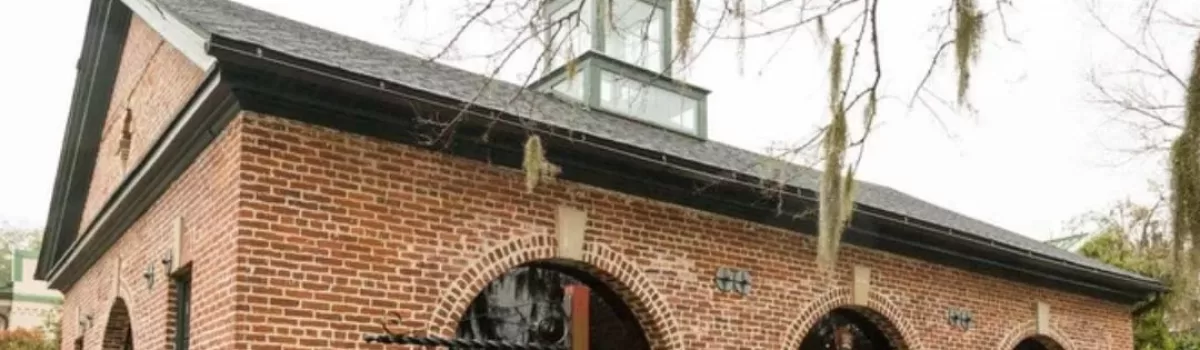
The Reconstruction Era National Historical Park Visitor Center can be found in the Old Beaufort Firehouse, 706 Craven Street. The visitor center contains displays and artwork that depict the struggle of the formerly enslaved people and their ascension to citizenship. The center also houses information about the other sites and their importance in the history.

Darrah Hall and the Brick Baptist Church can be found on the grounds of St. Helena Island’s Penn Center. The Penn School was established in 1862 as the first school in the south for former slaves. Quaker and Unitarian missionaries from Pennsylvania founded the school and taught classes. Early classes were held in the Brick Baptist Church, which was built in 1855 by the very slaves that would later learn to read and write within its walls. Careful examination of the bricks reveals handprints from the enslaved artists who formed the bricks from clay.

Darrah Hall image by Charleston Currents.

Darrah Hall is the oldest building on the campus of the Penn Center. It was built by Penn School specifically for community use. It has been a gathering place for the community for over 100 years. This building, along with others on the property represents the development of the center through the 19th and 20th centuries. The hall is used for interpretive purposes by the park, as well as for community events.

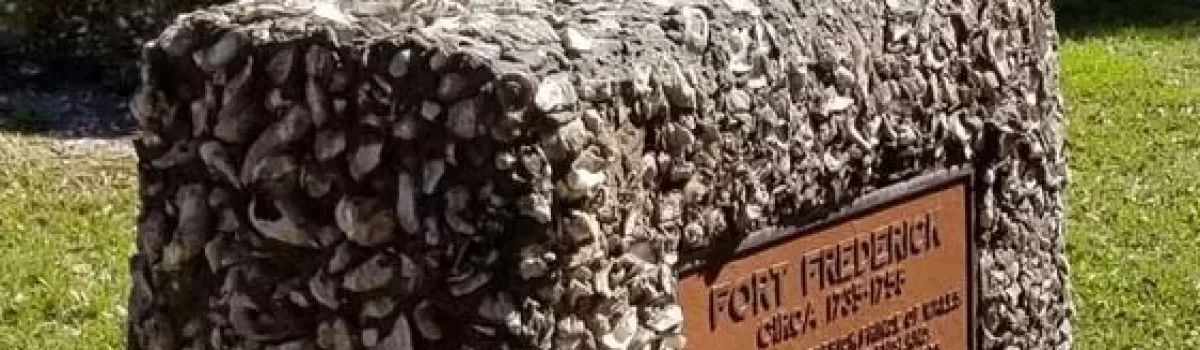
Camp Saxton was founded on the site of Fort Frederick, a pre-Revolutionary War fort that was abandoned and absorbed into Smith Plantation. On New Year’s Day in 1863, the Emancipation Proclamation was read aloud here to 10,000 former slaves. After the Proclamation was read, the 1st South Carolina Volunteers was formed. This all-black regiment trained at Camp Saxton from 1862 to 1863. The site is preserved as the Fort Frederick Heritage Preserve. The tabby fort was originally built by the British in the 1730s. During the Civil War a bridge was built across its walls to serve as a dock to welcome former slaves to the reading of the Emancipation Proclamation.

Pinckney Porter Chapel is a Reconstruction-Era Freedman’s Chapel that was restored and moved to Port Royal’s Naval Heritage Park. The chapel houses temporary exhibits and Camp Saxton programs begin at the site. The chapel is, in part, named for Senator Clemente Pinckney who served as pastor to the church from 1996-1998. Senator Pinckney was gunned down while serving as a pastor for Charleston’s Mother Emanuel AME Church in 2015. Pinckney was a beloved native of Ridgeland and served as a South Carolina state senator for Beaufort County. The chapel is open on Saturday mornings and park rangers are available to answer questions.

Reconstruction Era National Historical Park Visitor Center – 706 Craven Street, Beaufort
Brick Baptist Church – 85 Martin Luther King Drive, St Helena Island
Darrah Hall & Penn Center – 16 Penn Center Cir E, St Helena Island
Camp Saxton – 601 Old Fort Road, Port Royal
Pinckney-Porters Chapel – Naval Heritage Park, Pinckney Street, Port Royal

Read More

Beaufort & the Port Royal Experiment

A new beginning

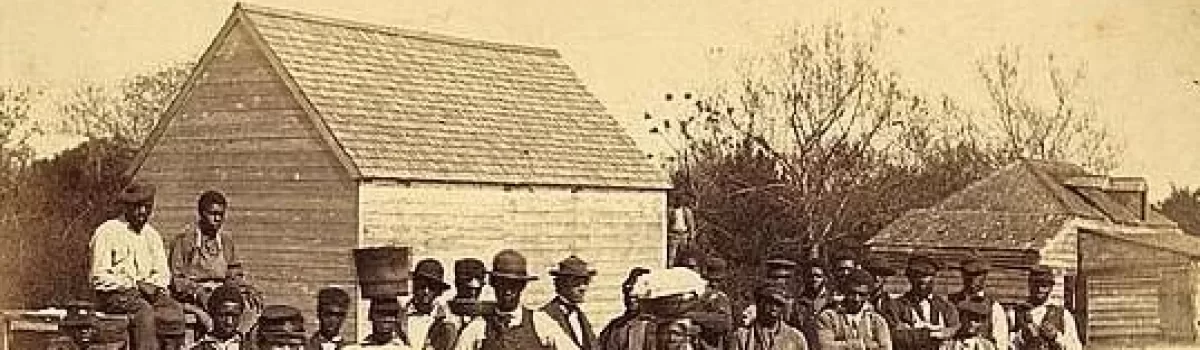
This image celebrated Emancipation Day as it was seen at Beaufort’s Ft. Frederick, also known as Camp Saxton.

The Port Royal Experiment started just seven months after the first shots of the Civil War were heard. Beaufort and its sea islands were occupied by the Union Army by November 7, 1861, thus freeing its slaves.  Beaufort quickly became the epicenter for Reconstruction after Confederate soldiers and plantation owners fled the area, leaving 200 sea island plantations and 10,000 slaves abandoned. Having no resources or direction, former slaves looked to the Union Army for support. Union officials oversaw the harvesting of approximately 90,000 pounds of cotton by the newly freed men and women. Workers were paid $1 for every 400 pounds harvested. This was the first time newly freed slaves earned wages for their hard work. Frederick Law Olmstead was the executive secretary of the US Sanitary Commission. He felt it was necessary for the Union to, “Train or educate them in a few simple, essential, and fundamental social duties of free men in civilized life.” Olmstead was a famous landscape architect who would go on to design Central Park, Niagara Reservation at Niagara Falls, Biltmore Estate, and many other prestigious grounds. The Port Royal Experiment was an essential plan that offered newly freed slaves an education and a chance to work and live independently of white control. The freedmen’s Bureau was established to help former slaves succeed in their new way of life.

At the suggestion of General Sherman, the US Congress confiscated a strip of coastal land from Charleston to Florida. President Abraham Lincoln issued new land distribution policies that saw 40,000 acres of this land divided between freed families. They were allowed to purchase up to 40 acres of land for $1.25 per acre. Excess army mules were redistributed to the new property owners. It is thought that this was the origin of the slogan “40 acres and a mule.” White northerners were also allowed to buy land, creating tenant farming.

Hilton Head Island’s Fish Hall Plantation became the site of Mitchelville. This image was taken in 1862 by Henry Moore.

By January of 1862 Union General Thomas W. Sherman requested teachers to instruct the freed men, women, and children. Later that year, the Port Royal Experiment began. This radical program created schools and hospitals for the freedmen. It also allowed them to purchase and run abandoned plantations. 53 missionaries from the New England Freedmen’s Aid Society volunteered during this humanitarian crisis. Skilled teachers, ministers and doctors travelled south to teach life skills and religious studies. Two pivotal initiatives that paved the way for Reconstruction were begun in the Lowcountry – Mitchelville and Penn School.

Freedmen gather at Penn School to learn to read and write along with other skills.

Laura Towne was dispatched from Pennsylvania with funds to create the Penn School, one of the largest schools created during the experiment. She and fellow educator Ellen Murray established an educational mission on St. Helena Island called Penn School. This was the first school for former slaves of the sea islands. The first classes were held at Oak Plantation, then when enrollment increased, they moved to Brick Church. A school was built adjacent to the church and a complex developed around it which served as a center for the St. Helena Island Gullah community. Along with teaching literacy, the school provided training for midwives, a health care clinic, and the state’s first day care center for black children.

Rev. Jesse Jackson; Joan Baez; Ira Sandperl; Dr. Martin Luther King, Jr.; and Dora McDonald on the Penn Center campus in 1964. Photo credit: Bob Fitch

The Penn Center took on a new role during the Civil Rights Movement of the 1960s. In those days there were only a handful of safe havens for black leaders to gather. Civil Rights activists, including Martin Luther King, Jr. spent a significant amount of time on the Penn Center campus. Dr. King and other influential civil rights activists were able to meet and strategize on the beautiful campus. The spot also served as a retreat for the Southern Christian Leadership Conference. The Penn Center campus was designated a National Historic Monument in 1974. The center is still a vital part of the community. History and culture are preserved in the center’s museum, outreach programs and educational experiences.

The community of Mitchelville was planned and built in 1862.

The wartime Department of the South was headquartered on Hilton Head Island. Union General Ormsby Mitchel granted Hilton Head freedmen permission to develop the town of Mitchelville in 1862. This was the creation of the first all-black, self-governing community in the country. Government and missionary efforts provided blacks of Mitchelville with education, religion and promoted self-reliance. While learning new skills, the citizens of Mitchelville were able to thrive and continue their Gullah customs and culture.  By 1865 Mitchelville had 1,500 inhabitants. They built the First African Baptist Church. Homes were built on quarter-acre lots, where the new inhabitants could grow produce in their own gardens.  General Mitchel died from yellow fever, just six weeks after arriving in Mitchelville.

Freedwomen and children began a new way of life in Mitchelville.

Mitchelville became a fully functioning town, complete with a mayor, councilmen, a treasurer, and other officers who oversaw every aspect of the town. The town boasted three churches, two schools, a store, cotton gin and grist mill. Mitchelville also passed the first compulsory education law in the state, requiring all children between 6 and 15 to be educated in school. The town stretched over 200 acres along the shore of the Atlantic. The major source of employment was the US Army Headquarters. After the war, jobs disappeared with the withdrawal of the US Army. This sent freedmen away from Mitchelville in pursuit of employment. The property that Mitchelville occupied was returned to the previous owners during the Johnson administration. They chose to sell the land to anyone that was interested in purchasing, including former Mitchelville citizens. Most of the land was bought by Freedman March Gardner. The land was later divided amongst heirs and the town no longer appeared on maps by the early 20th century. Most of the land was eventually sold to the Hilton Head Company and placed on the National Register of Historic Places in 1988. The site is preserved as the Historic Mitchelville Freedom Park. The park serves as a Reconstruction Era heritage site. The park features exhibits, signature events and guided tours.

Freedmen harvest cotton.

The death of Abraham Lincoln on April 15,1865 ended the momentum for the Port Royal Experiment. President Andrew Johnson worked to restore all lands to their previous owners. Many freedmen that bought land witnessed it returned to its former owners. Sharecropping quickly began to creep onto the scene. Not all black landowners lost their land. Many were able to retain ownership of their purchased properties because they were not reclaimed by the previous owners. By 1868, the Freedmen’s Bureau was completely dismantled. Momentum for the Port Royal Experiment began to diminish with the new administration. The Reconstruction Era ended in 1877. Although it was a brief period in American history, it marked a significant chapter in the history of civil rights in the United States.

Read More

Fort Frederick Heritage Preserve

The date was January 1, 1863, when former enslaved Beaufortonians crossed over into Fort Frederick from Port Royal, Beaufort, and the surrounding sea islands to hear the first reading of the Emancipation Proclamation in the southern states. This event marked the most dynamic occurrence in the fort’s 289-year history.

Fort Frederick was built by the British colonial government between 1733 and 1735. It is the oldest surviving tabby fort in South Carolina and the oldest tabby structure in Beaufort County. Tabby was a building material used in the early days of the coastal south. Sand, lime, oyster shells and water were burned and mixed to form an early version of concrete. Tabby was poured into molds to form foundations, walls, columns, and blocks. Examples of tabby can still be seen all throughout the historic district of Beaufort. Even the city’s sea wall is made from tabby.

Fort Frederick was established after the Yemassee War in Port Royal to protect against possible attacks by the Spanish. It also served as an outpost to signal “Beaufort Town” of approaching ships. The fort remained active until 1758. The small 75-ft by 125 ft fort contained barracks, a powder magazine and gun platforms. It was located along the Beaufort River behind a parapet with a battery of guns protecting the river and town of Beaufort.

British Regulars were posted at the fort, but luckily never saw attack. A larger, stronger fort was established just upriver, and Fort Frederick was abandoned.  The deserted fort fell into disrepair and wouldn’t see use again until 1861. Union Colonel Thomas Wentworth Higginson brought activity back to the fort site after the Battle of Port Royal. After the historic reading of the Emancipation Proclamation, newly freed citizens were given the opportunity to enlist in the Union Army. He and his new regiment of black soldiers used the property as headquarters. The site was named Camp Saxon, after General Rufus Saxon, commander of the Beaufort District.

Before the start of the Civil War, Fort Frederick was absorbed into the Smith Plantation. Parts of the tabby structure were used as a dock for boats serving the plantation. During Beaufort’s “Great Skedaddle” Smith’s Plantation was abandoned, and the Union troops moved in. Colonel Higginson and his new soldiers would become the African American 1st South Carolina Regiment of Volunteers. Together they listened to the first reading of the Emancipation in the center of a crowd which was estimated well into the thousands. In 1863 the fort and its surrounding plantation land were sold for non-payment of $93.40 in back taxes. The US government purchased the property for $1,000.00. Part of this site was developed into the US Naval Hospital in 1949.

Image from the SC Department of Natural Resources.

Archaeologists with the South Carolina Department of Natural Resources and the Institute of Anthropology and Archaeology at the University of South Carolina excavated the site in 2014 to inventory the grounds. They also rebuilt the remaining tabby walls to give visitors a more complete image of what the fort once looked like. This work also protected the remaining tabby material. A portion of the structure is underwater today due to the river changing course.

The South Carolina Department of Natural Resources and Beaufort County now maintain the area as the Fort Frederick Heritage Preserve. The six-acre park is a mix of hardwood forest, maritime forest, and salt marshes on the Beaufort River. Located at 601 Old Fort Road in Port Royal, the preserve is open to the public daily, from dawn to dusk. The preserve includes a public access point, parking area and picnic pavilion, as well as the tabby fort ruins.

Read More

Good Morning Lowcountry!

Good Morning America Comes to the Lowcountry!

Image from Rise and Shine, Only On Good Morning America.

The morning crew of Good Morning America spent some time in the South Carolina Lowcountry focusing their attention on the rich Gullah culture of the Beaufort sea islands. According to the Gullah Geechie Corridor website, “The Gullah Geechee people are descendants of Africans who were enslaved on the rice, indigo and Sea Island cotton plantations of the lower Atlantic coast.  Many came from the rice-growing region of West Africa.  The nature of their enslavement on isolated island and coastal plantations created a unique culture with deep African retentions that are clearly visible in the Gullah Geechee people’s distinctive arts, crafts, foodways, music, and language.”  The ancestors of the Gullah Geechie people of the Lowcountry continue the traditions of their forefathers and celebrate their rich heritage on a daily basis.

Image of Kenneth Moton and Mary LeGree from GMA3.

University of South Carolina graduate and Good Morning America reporter Kenneth Moton spent time with Beaufort natives Mary Rivers LeGree, Victoria Smalls and Anita Singleton Prather. Mary Rivers LeGree is a native of St Helena Island. She lives on land purchased by her ancestors during Reconstruction. Her roots are deep in the Gullah community. She is protector of the Coffin Point Praise House, which sits not too far from her home. She is also the voice for Gullah Culture at the Beaufort Visitors Center, where she educates tourists about her rich heritage. Concerned Gullah Geechie traditions will fade away with the younger generations, Mary LeGree wants places like the Coffin Point Community Praise House to be a source of inspiration to educate and preserve a culture that helped build a nation.

Image of Victoria Smalls and Kenneth Moton from GMA3.

Victoria Smalls is the executive director of the Gullah Geechie Cultural Heritage Corridor. This area spans the Atlantic coastline from North Carolina to Florida. She shared the story of Beaufort hero Robert Smalls. He was one of the first African Americans to serve in congress. After the Civil War, this Gullah statesman purchased the property where he was formerly a slave. He advocated for black land ownership. Victoria Smalls shared her ancestors purchased 20 acres after the war and it has been handed down over the years.

Image of Gullah Gullah Island from GMA3.

Gullah culture became well known during the 1990s with the production of Nickelodeon’s Gullah Gullah Island, starring St. Helena Island’s own Ron and Natalie Daise, along with their children. The tv show explained the rich and pure culture. Since then, many shows have aired that show the rich heritage of the Gullah Geechie culture, including a recent Netflix episode of “High on the Hog: How African American Cuisine Transformed America”.

Image of Anita Singleton Prather from Rise and Shine, Only On Good Morning America.

From the sanctuary of the Beaufort Tabernacle Baptist Church, Gullah storyteller Anita Singleton Prather spoke of the importance of the Gullah culture as a culture of survival. She spoke of it “…as a trophy of perseverance…of people that went through horrible things, and could have been completely wiped out, but not only die we survive, but we continued to thrive…We’re still here.”

For more information about other Gullah landmarks in the Lowcountry visit southcarolinalowcountry.com/african-american-cultural-sites-across-the-lowcountry/

https://www.youtube.com/watch?v=krbSa9vk2AA&t=97s
https://www.youtube.com/watch?v=oe12ebnQoak&t=23s
Read More

Beaufort’s First Friday Event

Come over to beautiful Beaufort, SC to shop, dine, dance, play and socialize.

Life is like a box of chocolates and you never know who you’ll see at Beaufort’s First Friday event!

The historic town of Beaufort is big on tradition and social gathering. This Lowcountry town has dedicated a special day each month for just such occasions. Come over to Beaufort on the First Friday of every month. Bay Street will be closed to traffic in the evening so people can gather and have a good time. The shops are unique, the food is divine and the people are one-of-a-kind! Experience southern hospitality in the heart of the Lowcountry!

Holidays are especially fun at First Friday.

First Friday is a celebration of Downtown shops, restaurants, cultural venues, and community. It’s a fun night for the downtown businesses and for locals! Come explore downtown galleries, shopping, and eateries throughout the evening. Bay Street is closed to vehicle traffic from 5-8 p.m. Enjoy entertainment and live demonstrations too! The event is free and open to all ages.

The downtown stores always stay open late for First Friday!
beaufort first friday
Downtown shops are always open late for this monthly event.

December’s First Friday kicks off Beaufort’s Holiday Weekend. This fun three-day event includes Night on the Town, a lighted boat parade and Christmas parade. Be sure to add this to your calendar of events.

beaufort first friday
Dancing on the street is always a big event at Beaufort’s First Friday events!
beaufort first friday
Beaufort’s First Friday is always a highly anticipated monthly event.
Shop, dance, dine & play!
Read More

Port Royal Farmers Market

Come hungry and leave happy!

The Port Royal Farmers Market sets up in the Naval Heritage Park every Saturday, from 9-12. You will find a vast selection of fresh, local and seasonal produce, along with shrimp, oysters, poultry, beef, pork, eggs, bread and cheese.

If you’re lucky Carolina Kidz will be there with a Nigerian Dwarf Goat to pet. They provide a wonderful selection of raw goat’s milk, drinkable yogurt, goat cheese; chevre, ricotta & feta and goat cheese cheesecake.

Daise Produce, along with many other produce vendors will be on hand with a large selection of farm fresh goodies. Come early for the best selections.

Shoppers will also find plants, ferns, camellias, azaleas, citrus trees, and beautiful, fresh cut flower bouquets.

​Check out the prepared food vendors serving; BBQ, dumplings, she crab soup, crab cakes, paella, coffee, baked goods, bagels and breakfast sandwiches.

Come hungry and have coffee and a breakfast sandwich while you peruse the vendors. Make sure to bring your market basket so you can fill it with local goodies. For a list of vendors and a description of their products visit the Port Royal Farmers Market Website. For a complete list of Lowcountry farmers markets and the days they are open, visit SouthCarolinaLowcountry.com/farmersmarkets.

​Port Royal Farmers Market at Naval Heritage Park
Ribault Road and Pinckney Street.
Open every Saturday from 9 to 12.

Read More

Are you ready to celebrate the season? Our March calendar is busy.

March is upon us and so are all the festivities that come with it! The Lowcountry is busy with festivals and activities to keep us entertained all month.

Bluffton Artisan Market

Bluffton will be starting off the month’s festivities with the inaugural Bluffton Night Bazaar held under the twinkling lights of the Burnt Church Distillery courtyard. This new monthly event features local artisans, live music, food & drink.

Bluffton Charities Oyster Roast

The Beaufort Charities Oyster Roast is just a few days away, on March 5th at Live Oaks Park in Port Royal.  In its 17th year, the Oyster Roast features all you can eat Beaufort oysters from 1-8 pm. Entertainment will be provided by local bands The Entertainers and Steel Rail Express. The event also includes premium micro-brews, a full day children’s program, live auctions, and local vendors offering varied fairs.

Walterboro History, Arts & Music Festival

Walterboro is excited to announce the return of the Walterboro History, Arts & Music Festival. This festival celebrates local history along with visual and performing arts added into the mix. Artists, performers, reenactors, storytellers, musicians and more entertain the crowds that come from near and far. The festival will be held in various locations throughout Walterboro, March 7-12.

Beaufort History Museum Revolutionary War Events

The Beaufort History Museum will host two Revolutionary War events March
11-12, 2022, as part of its anticipation of the 250th anniversary of the war in 2026.
On Friday, March 11, 2:00-3:00 p.m., at the St. Helena Island Public Library, 6355 Jonathan
Francis Sr. Rd., Rita Elliott will discuss the Battle of Purrysburg, S.C., and later
archaeological dig discoveries made at the battle site.
On Saturday, March 12, 10:00 a.m.-4:00 p.m., at the Beaufort History Museum, 713 Craven
St., re-enactors from the 5th Company, 4th South Carolina Regiment will conduct a live-fire
demonstration with period artillery. The team will be set up in the walled Arsenal Courtyard and provide a unique educational opportunity for visitors of all ages. Live cannon demonstrations are planned at 30-minute intervals throughout the day starting at 10:30 AM. Both events are free and open to the public.

Pinnacle Bank Hilton Head Shamrock 5k

Dust off your green because the Hilton Head Island St. Patrick’s Day Celebration is BACK!! It’s time to turn out for South Carolina’s oldest St Patrick’s Day Parade. Kick off your St. Patrick’s Day Celebration on Hilton Head Island during the 27th Annual Pinnacle Bank Hilton Head Shamrock 5K. Hilton Head’s Annual “Running of the Green” will be held on Saturday morning March 12th at 7:30am.

Hilton Head St. Patrick's Day

Next on the agenda is the Hilton Head St. Patrick’s Day Weekend. Come view the 2nd Annual Boat Parade as it cruises down Broad Creek, followed by an Irish concert at Lowcountry Celebration Park. The parade is the grand finale! It will proudly march down Pope Avenue Sunday, March 13th at 3pm.

Sham Rocked Sip & Stroll 2022

Join Beaufort March 12th in historic downtown as they celebrate St. Patrick’s Day in a fun way! The Sham Rocked Sip & Stroll 2022 offers several ticket options from 10am – 2pm. Each attendee receives a Sip & Stroll t-shirt, swag bag, and access to all the goodie stations spread throughout downtown Beaufort. Goodie stations will feature either a cocktail, something yummy or something swag for you to have during your stroll. Downtown merchants will be open for shopping during or after the stroll. Restaurants will be featuring lunch and dinner specials as well! So grab your gal pals, friends, family, or significant other for a fun filled day in downtown Beaufort during the Sip & Stroll!

Hardeeville's Lowcountry Pow Wow and Cultural Festival

Soak up some local culture at Hardeeville’s Lowcountry Pow Wow and Cultural Festival March 12-13th. Millstone Landing is the backdrop for this festival that sets out to educate the public about Native Americans. It also creates a gathering place for Native people to celebrate their culture. The event features Aztec dancing, drumming, arts & crafts, native campsites, demonstrations, food and much more.

Beaufort Annual St. Patrick's Day Festival

Beaufort’s Town Center will be the site for their Annual St. Patrick’s Day Festival. This outdoor event will showcase a variety of wholesome activities for people of all ages. The 4th Annual St. Patrick’s Day Festival at Beaufort Town Center is a free, family-fun celebration benefiting the Beaufort Area Hospitality Association. The event will take place on Saturday, March 19 from 12-4pm. Area restaurants and food trucks will be selling food and drinks and there will be live entertainment including a bagpipe player, local music, and much more! This family-fun event will have activities for all ages! We will also have festive drinks available for the adults!

Hilton Head Wine and Food Festival

The Hilton Head Wine & Food Festival takes place the last week of March. This week-long celebration combines the fruits of global wine partnerships, signature Lowcountry cuisine, grassroots cultural happenings, and the authentic fabric of a unique community. Join us as we celebrate the 36th anniversary of this annual Hilton Head Island rite of passage. Experience for yourself this year’s schedule of events including spectacular celebrity chef showcases, intriguing wine education sessions, live entertainment and of course the famed Grand and Public Tasting events.

Read More

Hunting Island Lighthouse is closed for repairs, but visitors have options.

Hunting Island State Park’s historic lighthouse is closed to the public as repairs are made to the 147-year-old structure. The lighthouse can still be viewed from the grounds and docents will be on hand to interpret and give more information about the lighthouse.  And thanks to modern technology, you can experience views form the top of the lighthouse in the park’s visitors center.

The lighthouse will be closed to the public until further notice so repairs can be made to the stairs and railings. Public safety was a major priority when deciding to close the structure and make repairs. Visitors can still tour the lighthouse grounds and speak with docents about the history of the area. Visitors – have no fear. You can experience high tech views from this iconic tower. The visitors center, located just inside the park entrance has two different lighthouse experiences.

Interior spiral staircase image by Carmen Pinckney.

The visitors center now houses an 8-by-13-foot virtual lighthouse. This is a scaled-down model that visitors can enter to get a complete view from the top of the lighthouse. TV monitors provide images of the view that are especially important for people who are not capable of climbing 167 steps to the top of the actual lighthouse. Also, children under 44” are not permitted to climb the lighthouse, so they can get the experience of climbing to the top. There is also a virtual reality option. Visitors can wear a headset and get the complete sensation of walking around the lighthouse, climbing 136 feet to the top, and experiencing the 360-degree views.


According to the park’s website, “The original structure was built in 1859 and rebuilt in 1875 after it was destroyed during the Civil War. A unique feature of the lighthouse is that it was constructed of interchangeable cast-iron sections so it could be dismantled should it ever need to be moved. Severe beach erosion made it necessary to relocate the lighthouse 1.3 miles inland in 1889.”

For more information and a sneak peak of the lighthouse experience visit Friends of Hunting Island State Park.

For more information on the history of Hunting Island and its historic lighthouse visit Walk on the Wild Side at Hunting Island State Park.

Read More

Beaufort’s 2nd Annual Oyster Festival

Queen of the Carolina Sea Islands

A great time was had by all at the 2022 Beaufort Oyster Festival! The weather was a perfect combination of winter chill and sunshine. The city’s waterfront park was the setting and oyster lovers from near and far came out to enjoy great food, live music and activities. Oyster dishes of all kinds were provided by Maggioni Oyster Company, Sea Eagle Market, Lady’s Island Singles and Serg Group. Festival goers had their choice of oyster creations, from fried to steamed and everything in between!

The festival coincided with Beaufort Tides to Tables Restaurant Week. Participating restaurants pulled out all the stops to create mouth-watering menus. The week rounded up with the two-day Oyster Festival. The festival kicked off Friday night with food and music provided by the Country Project and Steel Rail Express.

Runners came downtown bright and early Saturday morning for the Oyster Boogie 5K Run. The Social Oyster Shuck started at 10 am and the Competitive Oyster Shuck commenced at 1 pm. A Cornhole Tournament went on throughout the day. A competition for best oyster dish was held on Saturday. Here’s what the competitors served up for the judges:

The Maggioni family has been harvesting and canning oysters in this part of the world since 1870, when they immigrated from Italy. The oyster company in in its fifth generation of ownership and is one of the largest providers of premium quality wild harvested bushels and single oysters. For this year’s festival Maggioni Oyster Company prepared oysters the old-fashioned way, just like we make in Lowcountry back yards. Three fire pits were placed in the park and oysters were roasted all day long. Head over to the Port Royal Farmers Market every Saturday from 9 am – noon to pick up Maggioni Oysters, or call 912-844-1031 and ask for Jeff.

Sea Eagle Market delivers fresh seafood from their boats on St. Helena Island. The family has been in the business since the 1970s. They deliver fresh seafood all over the state. They also have a busy catering business and market at 2149 Boundary Street, Beaufort. Sea Eagle served oysters raw, steamed and fried to perfection. They also dished up oyster fritters (my new favorite)! If you’re looking to purchase local seafood or have an event catered by the team, call 843-521-5090.

Lady’s Island Oyster Inc prepared single lady oysters with mignonette. Typically, classic mignonette is made from red wine vinegar, minced shallot, and freshly ground pepper. What did the Lady’s Island Oyster chef use? Who knows what his secret ingredients were? The oysters were delectable! Lady’s Island Oysters are harvested from their very own hatchery in Oysters can be ordered from Lady’s Island Oyster Inc by calling 843-473-5018.

The chef for Serg Group and Skull Creek Boathouse prepared a garlic, parmesan and breaded oyster dish that would melt in your mouth! Skull Creek Boathouse is located on Hilton Head Island. Their restaurant has a wonderful menu that reflects the bounty of the Lowcountry waters. Dine at their waterfront restaurant and enjoy the views as you indulge on delicious menu items. Don’t forget to try their hushpuppies with spiced honey butter! They are famous. You can find Skull Creek Boathouse at 397 Squire Pope Road, 843-681-3663.

The competition was fierce, and the judges struggled to pick a favorite. After much deliberation and a tiebreaker, Maggioni’s old fashioned oyster roast won.

Just like many festival-goers, I’m looking forward to next year’s Beaufort Oyster Festival. In the meantime, I’m going to try to figure out how to make oyster fritters! That’s a blog for another day. For more information on festivals in the Lowcountry visit SOUTHCAROLINALOWCOUNTRY.COM. You can also find accommodations, attractions and much, much more on our website.

Read More

The Mighty Southern Live Oak Tree

The live oak in the front yard of Frampton Plantation is estimated to be around 300 years old. Photo by Lowcountry Tourism Commission.

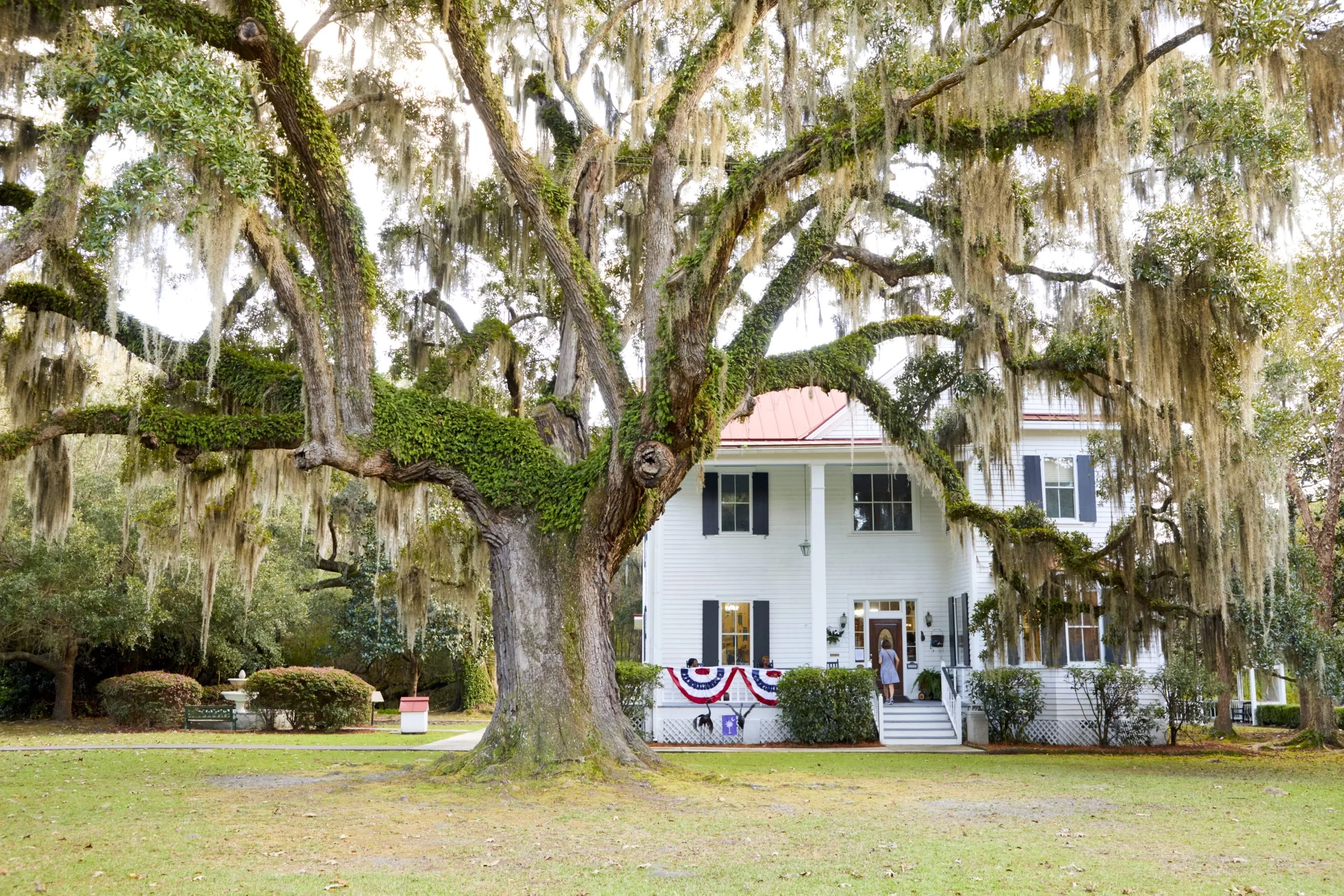
When you think of the south, you conjure images of the mighty live oak trees dripping in Spanish moss. These magnificent trees stand sentry around homes and lead the way down country lanes. The specimens that surround Frampton Plantation House have been around for 300 years. In fact, it was noted that after the original house was burned during the Civil War, the home was rebuilt in a different spot between four live oaks. All four trees are still alive and thriving today. In fact, these very trees have been reaching for the sun since c.1743.

Picnic under the southern live oaks in the backyard of Frampton Plantation Visitors Center. We’re conveniently located off I-95, at Exit 33 in Yemassee. Photo by Carmen Pinckney.

Live Oak trees are always up for company. Along the southern coast, live oaks live life beside Spanish moss and resurrection fern. Neither plant causes harm, they both feed from humidity and air. Resurrection fern grows along the tops of branches, turning green during rain and humidity, then brown when the air is dry. Spanish moss drapes gracefully from branches, feeding from water and nutrients found in the air.

Live oak branches tend to grow horizontally, dipping down then reaching back up toward the sun. This Tomotley Plantation tree is no exception. Photo by CJ Brown.

The branches of southern live oaks tend to grow horizontally, spreading across the landscape. Being a product of the south, I can attest to the fact that they make great climbing trees. If you were lucky enough to grow up with a live oak in your yard, there were always hordes of kids who wanted to climb, swing or picnic in the shade of these magnificent trees.  

Spanish moss and live oaks make a perfect backdrop for a Lowcountry wedding. Cotton Hall Plantation is available for just such an occasion. Photo by Cotton Hall.

Live oaks can grow to a height of 80 feet high. Given the room to grow, they can spread 100 feet wide. They grow at a rate of 13 – 24 inches per year. They grow in sun and shade and will thrive in just about any kind of soil. They can be found along the beach, deep in the forest, and everywhere in between. Mature live oaks can have a diameter of 6 feet. Some of the oldest live oaks are estimated to be several hundred to more than a thousand years old.

This 300 year old live oak stands watch in front of the Frampton Plantation house. Photo by Lowcountry Tourism Commission.

Southern live oak trees are nearly evergreen. They replace their leaves sporadically, so we never notice their shedding process. They produce sweet acorns that are a favorite food source of both birds and mammals. Wild turkey and deer are especially fond of this delicacy.

While live oaks can be found from Virginia to Florida and as far west as Texas and Oklahoma, the Southern live oak grows best in salty soils along the coast. Like most southerners, this tree is particularly fond of warm temperatures and salty breezes.

This lovely home on Hampton Street in Walterboro has a yard complete with a live oak. Photo by Lowcountry Tourism Commission.

The wood from southern live oaks is very dense and strong. It was once a preferred wood for shipbuilding. The naval vessel USS Constitution was made from the wood of live oaks. Repeated cannon fire could not destroy the ship during the War of 1812. The British cannons literally bounced off the live oak hull of the ship. The ship was nicknamed “Old Ironsides” after it survived the attack. Many older homes are floored with wood from these magnificent trees. Oak flooring is durable and takes on a golden hue with age and wear.  Structural beams and posts were also made from the strong wood of live oaks.

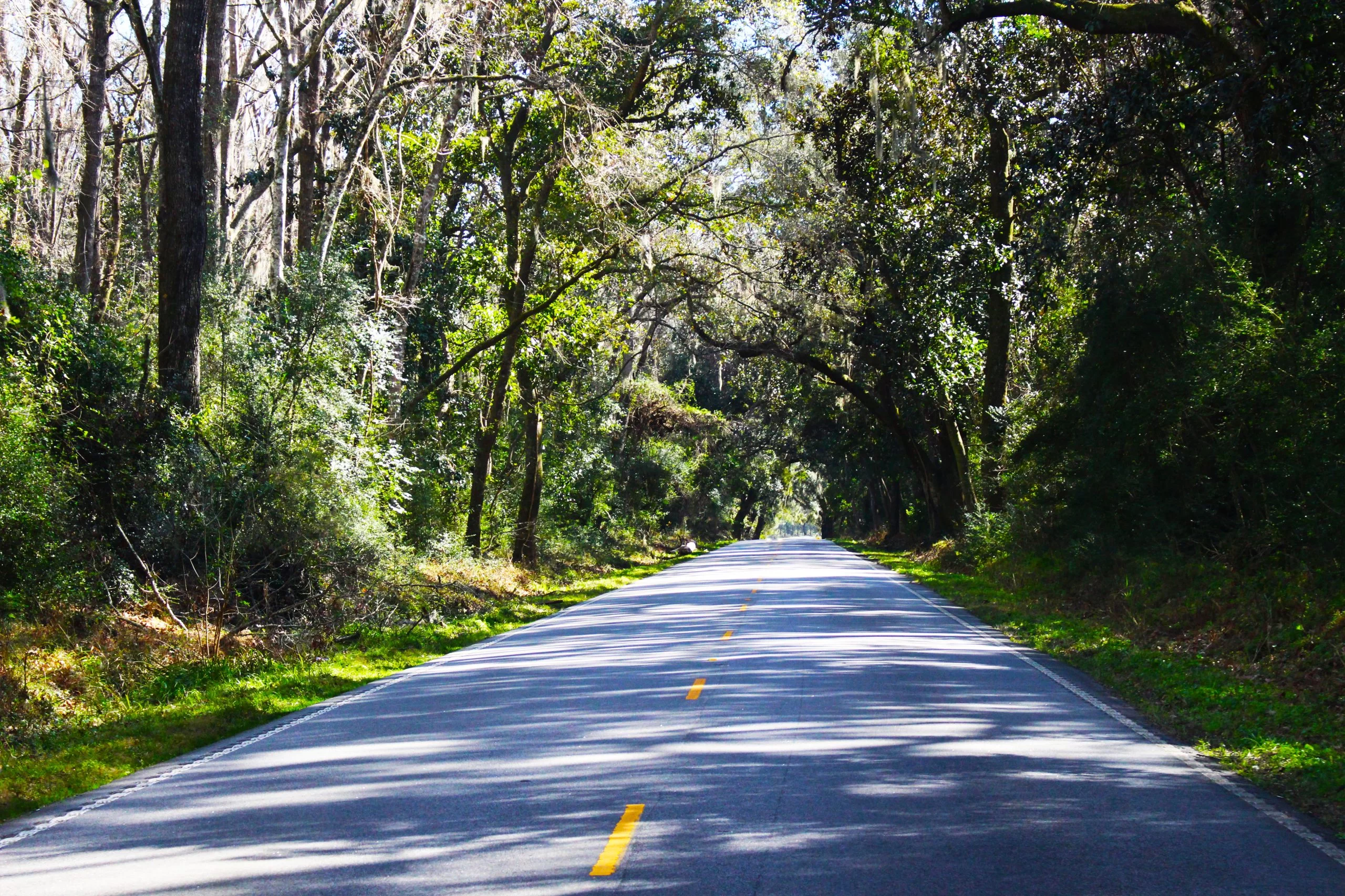
Live oak alleys can be seen throughout the Lowcountry. Some of the most popular can be found on Edisto Island and Lady’s Island, Beaufort. Many older plantation properties are distinguished by their alley of live oaks. Planted on both sides of lanes, the branches reach across and form a canopy across the roadways. Old Sheldon Road is a wonderful example of a live oak canopy. Nestled between Yemassee and Beaufort, this road leads to the Old Sheldon Church Ruins.

Old Sheldon road connects with Cotton Hall Road. This canopied road is home to several plantation entrances with live oak alleys. Both Tomotley and Cotton Hall Plantation entrances are visible. Yemassee’s McPhersonville Road is another great place to view a canopy.

Iconic oak alleys can be found on the route to Edisto Beach. ACE Basin and Botany Bay Plantation Wildlife Management Areas both have canopied entrances. They can be accessed via Highway 174.

Most of Bluffton’s Hwy 46 is covered in a live oak canopy. Pinckney Colony is lined with aged oaks as well.

The Beaufort Sea Islands are also great places to spend the day driving under the oaks. Coffin Point, Meridian and Lands End Road are good examples.

Savannah National Wildlife Refuge and Hwy 17 just south of Ridgeland are good spots in Jasper County to view the trees. Colleton County’s Donnelley Wildlife Management Area is another great place to drive through and see live oaks. Hampton County’s Webb Wildlife Management Area also has many examples of southern live oaks.

Resurrection fern is best seen after a good rain. This live oak can be found in the backyard of Frampton Plantation Visitors Center in Yemassee. Photo by Carmen Pinckney.
Resurrection fern and Spanish moss intermingle along the branches of this southern live oak tree that can be found in the front yard of Frampton Plantation Visitors Center. Photo by Carmen Pinckney.
Read More

See what our visitors love about the
SOUTH CAROLINA LOWCOUNTRY

Use the #hashtag #sclowcountry to get your image featured!

The Lowcountry & Resort Islands Region of South Carolina includes the four, southern-most counties in the state, Beaufort, Jasper, Hampton, and Colleton, which are bordered on the east by the Atlantic Ocean and on the west by the Savannah River and the state of Georgia.


#gailannlovinthedrive #huntingisland #sclowcountry #atlanticocean
Black-bellied Whistling Duck #blackbelliedwhistlingduck #birds #birdsofinstagram #birdphotography #wildlife #nature #sclowcountry #magnoliaplantation #magnoliaplantationandgardens #magnoliamoments #palmettostate #bestofpalmettostate #getoutside #shotoncanon #audubonsociety #nationalgeographic #natgeo #natgeowild
Otter, #otter #wildlife #nature #naturelover #sclowcountry #magnoliaplantation #magnoliaplantationandgardens #magnoliamoments #palmettostate #bestofpalmettostate #getoutside #shotoncanon #audubonsociety #nationalgeographic #natgeo #natgeowild
So happy that “Clouds Gather” has found its forever home. 💖 I hope this painting brings joy and memories of happy times to the new owners. #partagergallerygiftsandhome  #acrylicpainting #SCLowcountry  #southcarolina
Waking up early may seem dawn-ting, but a colorful sunrise is always a nice tree-t
Brown Pelicans are a regular site around the coastal waters of the SC Lowcountry. This beautiful image was captured by Jay Wooster. 🦅#thatsmylowcountry #sclowcountrySC Lowcountry Tourism Commission
"Gator for Lunch," Great Blue Herons #greatblueheron #nestingseason #birds #birdsofinstagram #birdphotography #wildlife #nature #naturelover #sclowcountry #magnoliaplantation #magnoliaplantationandgardens #magnoliamoments #palmettostate #bestofpalmettostate #getoutside #shotoncanon #audubonsociety #nationalgeographic #natgeo #natgeowild
Discover at your own leisure at the coastaldiscoverymuseum 🌳  From century-old buildings with storied pasts, to wooden boardwalks that stretch into the Jarvis Creek salt marsh, there's always something to explore!
Spanish moss drapes the live oak trees that are ubiquitous to the Edisto Island area. Did you know that Edisto gets its name from the native Edistow people? The Edistow Native Americans were a sub tribe of the Cusabo indians, a group of Native Americans who lived along the Atlantic coast in South Carolina.⏰ Best time of the day to visit: Stop by mid-morning. That way you can explore the island, grab lunch, and stay for the amazing sunset if you choose.🏖️ Things to do while there: Edisto Environmental Learning Center, Boneyard Beach, Scott Creek Inlet, Big Bay Creek, SeaCow Eatery.☀️ Things to visit in the area: Jungle Road Park, Bay Creek Park, Otter Islands, Spanish Mount Point.📆 Best time of the year to visit: For warmer weather come anywhere from March-August.🏨 Where to stay: Fripp Island Golf & Beach Resort (frippislandrsrt), Seabrook Island Club (seabrook_sc), The Sanctuary at Kiawah Island Golf Resort (kiawahresort), Charleston Kiawah Island/Andell Inn (andellinn).Photo by qcphotographer
A visitor takes a leisurely stroke under a canopy of live oaks draped with Spanish moss in the Palmetto Bluff (palmettobluff) neighborhood of Bluffton, South Carolina. Palmetto Bluff is a picturesque community that sits in the heart of Lowcountry. Nestled along the May River, it’s abundant with beautiful walking trails, historic sites, and stunning views.⏰ Best time of the day to visit: There is no wrong time to visit Palmetto Bluff. However, we highly recommend sticking around for one of their spectacular sunsets.🛶 Things to do while there: Stop by Cole’s for some regionally inspired Southern fare, paddle board, kayak, or canoe along the May River, go saltwater fishing, take a tour at Bluffton Jack's Old Town Tours.🌊 Things to visit in the area: Palmetto Bluff Conservancy, Old Town Bluffton, Bluffton Oyster Factory Park, May River Sandbar, Heyward House Museum and Welcome Center (heywardhouse).📆 Best time of the year to visit: For the best weather, we recommend visiting between March and May or from September to November.🏨 Where to stay: The Montage Palmetto Bluff Resort (montagepalmettobluff) is the only resort in Palmetto Bluff. However, there are plenty of places to stay in the surrounding areas including: Old Town Bluffton Inn (oldtownblufftoninn), The Inn & Club at Harbour Town (theinnandclubatharbourtown), Sonesta Resort Hilton Head Island (sonestahhi).Photo by jpgriceoz
Riding into the weekend like...Isn't this live oak tree tunnel beautiful? Live oak, draped in Spanish moss, is emblematic of South Carolina and many of the Southern states. We love these iconic trees, not only for their beauty, but their history as well. The average lifespan of a live oak is 300 years!Photo by qcphotographer
The shore gently recedes beneath the stunning Pawleys Island Pier. The unique island town, located about 25 miles south of Myrtle Beach and 70 miles north of Charleston, exudes laid-back, beachy vibes. Locals have definitely adopted an island state of mind and encourage visitors to as well. When you go, make sure to relax on the beach, explore the famous sand dunes, or fish in one of the many adjacent creeks.⏰ Best time of the day to visit: We guarantee that you’re going to want to spend a whole day here. We recommend getting to the beach at around 10am.🗓️ Best time of the year: Pawleys Island has the best weather during the spring and early summer months.🏖️ Things to do while there: Pawleys Island Nature Park, Pawleys Island Chapel, Hopsewee Plantation.🐠 Things to visit in the area: Brookgreen Gardens (brookgreen_gardens), take a walking ghost tour, Myrtle Beach (mymyrtlebeach), Harborwalk Marina, South Carolina Maritime Museum (southcarolinamaritimemuseum).🏨 Where to stay: The Oceanfront Litchfield Inn (oceanfrontlitchfieldinn), Litchfield Beach and Golf Resort (litchfieldbeachandgolf), Sea View Inn (seaviewinn), 620 Prince (620prince).Photo by qcphotographer
What were your weekend views today? #DiscoverSC 📸📍Botany Bay Beach: charlestonshopcurator
Headed down the road....Edisto Island.  #edisto #sclowcountry #trees #endofday  #beauty #islandsofsc
Angel Oak, Johns Island, South Carolina. ⠀
⠀
The Angel Oak Tree is a Southern live oak (Quercus virginiana) located in Angel Oak Park on Johns Island near Charleston, South Carolina. The Angel Oak Tree is estimated to be at least 400 and possibly up to 1400 years old It stands 66.5 ft (20 m) tall, measures 28 ft (8.5 m) in circumference, and produces shade that covers 17,200 square feet (1,600 m2). Its longest branch distance is 187 ft. in length. ⠀
⠀
#angeloak #angeloaktree #southcarolina #johnsisland #charleston #DiscoverSC #lowcountry	#SCLowcountry #lowcountrylife	#igerssouthcarolina #blackandwhite #b&w #oaktree #legacyoak #blackandwhite	#blackandwhitephotography #totravelistolive	#travel_captures	#travellove	#travelpics	#travelpic	#travelbug	#travelandlife	#lifeisajourney #adventuroussoul

The South Carolina Lowcountry Guidebook is filled with many things to see and do in the beautiful Lowcountry of South Carolina. Please fill out the information and we will send you a FREE GUIDE BOOK.

    Stay Up To Date

    Sign up for our newsletter!