The St Helena steeple towers over Beaufort. Photo Credit: Robert Gecy
With a steeple that towers over the town of Beaufort, SC, the Parish Church of St. Helena is one of the oldest churches in North America. Established in 1712 as a colonial parish of the Church of England, this church still serves the community it surrounds. The original church was almost completely demolished in 1824 to allow for an expansive rebuild.
Photo Credit: Denise Berry
The church and grounds were used by the Union Army as a hospital during their occupation of Beaufort during the Civil War. It is rumored that they even used slabs from the graveyard as operating tables.
The cemetery and back view of the church. Photo Credit Luciano Periera do Souza
Luckily the church was spared from ruin, and after the war services resumed. The church was preserved, and its steeple tower was extended in 1942. The historic church boasts white pillared columns on its stately exterior
Cemetery image by Matt Zeigler.
The neighboring churchyard is just as historically significant as the church itself. Many founding fathers of Beaufort are buried here. One of the first church members laid to rest here was Colonel John Barnwell, also known as Tuscarora Jack. He was an important officer during the Tuscarora (1712) and Yemassee Wars (1715). Two British officers killed during the Battle of Port Royal are buried here as well. It is also the resting place of two Confederate officers. Lt General Richard H Anderson and Brigadier General Stephen Elliott.
Grave stone image by Becca Brashear.
While visiting Beaufort stroll over and explore the church and its graveyard. Be sure to bring a camera to capture the beautiful church exterior and gravestones dating back to the 1700s. Your visit will give you a look back in time to the beginnings of this great and historic city.
Northbound from Robert Smalls Parkway to Clarendon Rd.
Today’s journey started at Beaufort Plaza on Robert Smalls Pkwy. Photo by Carmen Pinckney.
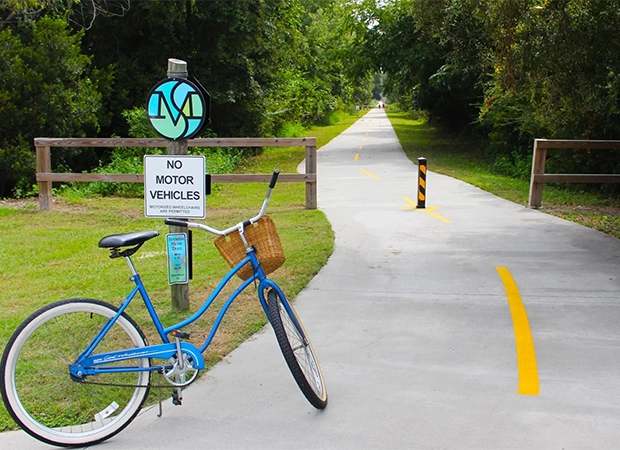
The Spanish Moss Trail is an expanding rails-to-trail greenway running from Clarendon Road in northern Beaufort County to Port Royal along the historic Magnolia Line Railroad, which once connected Yemassee to Port Royal. This was an active railroad line from 1870-2003. This 10-mile greenway has become a must-experience activity for locals and tourists alike. The 12-foot-wide paved trail is a great space for walking, running, biking, skating, scooting, strolling or even fishing. The trail is handicap accessible, and parking lots are provided.
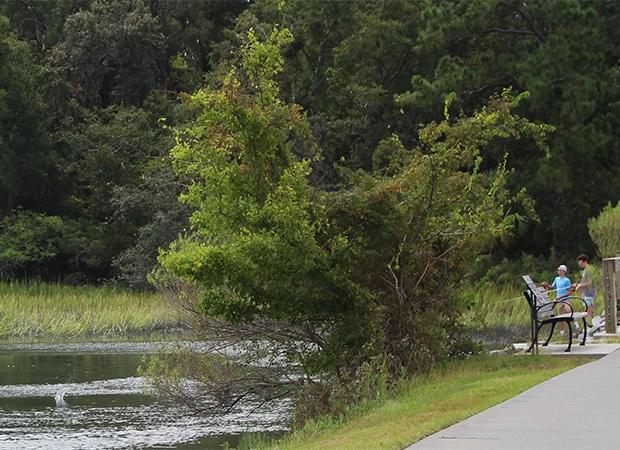
Lowcountry river views are spectacular along the Spanish Moss Trail. Photo by Carmen Pinckney.
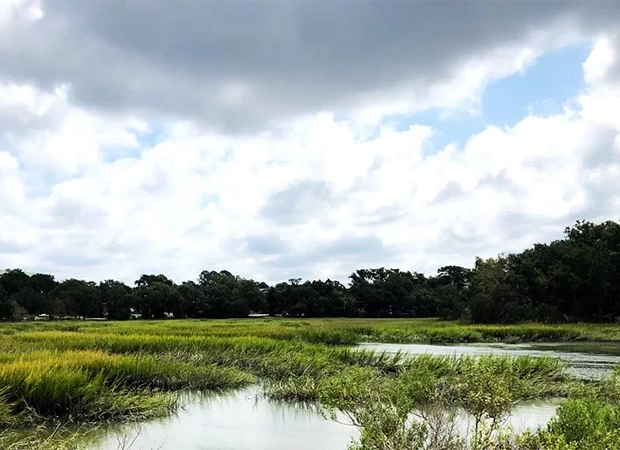
The Spanish Moss Trail offers spectacular views of Lowcountry marshes, waterways, coastal wildlife and historic points of interest. Points of interest are well marked along the trail. Pets on a leash are welcome on the trail.
Pick Pocket Plantation. Photo found on Pick Pocket Facebook page. Photo by Carmen Pinckney.
Heading west, from Robert Smalls Parkway passes along Pick Pocket Plantation. A historic marker tells the history of this mid-19th century plantation with the funny name. According to the marker, little is known of the original owners, or how it got its name. The property changed hands many times before George W. Trask bought the farmhouse and its 214 acres. From this location, Trask and his sons ran the most prosperous truck farming businesses in Beaufort County. The property stayed in the Trask family until 2006. The house and 15 acres of the property sold to John H. Keith. He restored the dilapidated farmhouse and moved eight other historic buildings to the site.
A tunnel is a rarity in Beaufort. Photo by Carmen Pinckney.
The trail travels along Highway 21 for a while. Lowcountry natives like this stretch because it includes a hill. The trail dips beneath a driveway and under a tunnel. Hills are a rarity in this part of the state. Biking down a hill is a real treat!
Photo by Carmen Pinckney.
The trail pulls away from the highway and over a trestle that has lovely views of Albergotti Creek.
A boardwalk leads toward the Marine Corps Air Station. Photo by Carmen Pinckney.
The Roseida Road Trailhead is next. It has ample parking spaces and a trail map. Handicap spots are available. There is also a Parker’s Gas Station at this access point that has public bathrooms. The trail next heads over a wetland area and accessed by a beautiful boardwalk. This leads directly in front of the Marine Corps Air Station entrance. Cross at the light and head further up the trail.
Photo by Carmen Pinckney.
This area was also the site for the Battle of Port Royal Island. This battle was one of 250 military engagements fought in South Carolina. Under the direction of General William Moultrie, 300 SC militiamen defeated the British in this area in 1779. This American success gave a needed boost to our troops after the fall of Savannah the previous year. On a side note – two signers of the Declaration of Independence fought in this battle: Captain Edward Rutledge and Captain Thomas Heyward, Jr.
The Hwy 21 Drive-In entrance can be seen from the trail. Photo by Carmen Pinckney.
Another historic site located along this path is Beaufort’s famous Hwy 21 Drive-in. This family fun attraction has been around since 1978. It closed briefly from 2003-2004, then reopened with much fanfare. It now has two screens and is one of only three drive-ins in South Carolina. The 80-ft tall screens have a digital format and show movies year-round. This is an attraction enjoyed by locals and tourists alike.
The pavement ends and the “road less traveled” begins. Photo by Carmen Pinckney.
As you travel further along the trail the pavement ends and a dirt and gravel section begins. This will be paved in the future. Pavement begins again as you near the Clarendon Road access point. This is the spot of Clarendon Plantation. In 1928 H.W. Corning bought 5,000 acres overlooking the Whale Branch River which he called Clarendon Plantation. This estate contains the remains of SC governor Paul Hamilton, who also served as Secretary of State during the War of 1812. Due to its proximity to the Magnolia Line Railroad, the property has been used as a sawmill, turpentine production, timber, cattle ranching, quail hunting, hay and other crops. It has also seen its share of fishing, hunting and other outdoor activities.
The Clarendon Trailhead has ample parking. Photo by Carmen Pinckney.
The Clarendon trailhead is the end of the journey – for now. It has a great parking area and for anyone wishing to complete the entire trail in one day, it’s a great place to park and start. The plans call for additional pathway to be added that will lead through and end at the river. The master plan map also shows additional path at the opposite end leading into Port Royal, and a path into downtown Beaufort.
Future extensions can be seen on the map. Photo by Carmen Pinckney.
These additions will be a great asset for what is already a wonderful Beaufort attraction. Plan on spending at least two hours to bike the northern side of the Spanish Moss Trail. Give yourself more time if you’re walking. Be sure to pack supplies for your journey. Make sure to stop along the way to read historic markers and enjoy views from the trestles. If you get tired just take a break on one of the many benches provided. Stay tuned for a future post on additions to the trail.
Butterflies flock to wildflowers along the Spanish Moss Trail. Photo by Carmen Pinckney.
Southbound from Robert Smalls Parkway to Port Royal
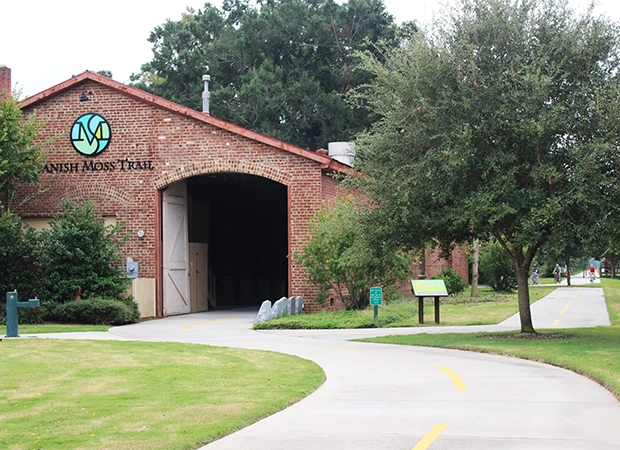
Spanish Moss entrance from Beaufort Plaza.
Photo by Carmen Pinckney.
The Spanish Moss Trail is an expanding rails-to-trail greenway running from northern Beaufort County to Port Royal along the historic Magnolia Line Railroad. This 10-mile greenway has become a must-experience activity for locals and tourists alike. The 12-foot-wide paved trail is a great space for walking, running, biking, skating, scooting, strolling or even fishing. The trail is handicap accessible, and parking is provided.
Views from a trestle bridge are spectacular.
Photo by Carmen Pinckney.
The Spanish Moss Trail offers spectacular views of Lowcountry marshes, waterways, coastal wildlife and historic points of interest. Points of interest are well marked along the trail. Pets on a leash are welcome on the trail. Doggie bag stations are available as well. There’s even a place to pump up your tires at the Depot Road access point. You can also find recreational fishing spots on various trestles along the trail.
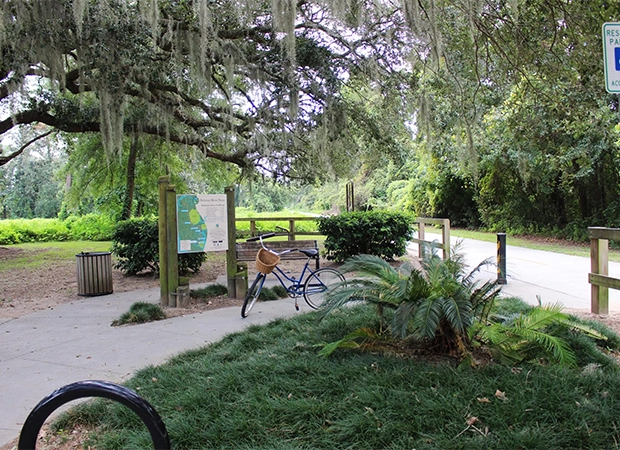
All access points have maps that mark the trail and its facilities.
Photo by Carmen Pinckney.
Bringing a bottle of water is a good idea. You can refill it at any of the trailheads. There are also two restroom/port-a-potty facilities at the Broome Lane and Depot Road Trailheads. The Westvine Trailhead has equipment for push-ups and pull-ups.
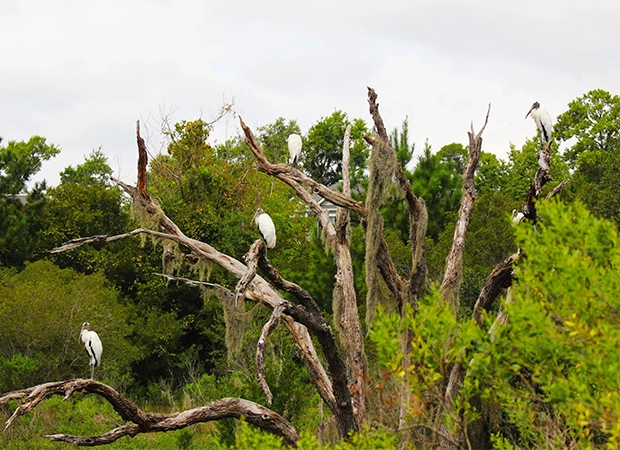
Wood Storks keep an eye on the water from their perch along Battery Creek. Photo by Carmen Pinckney.
From one of the trestles it was easy to spot a family of wood storks taking an afternoon nap. These wading birds are rather humble looking when at rest but are beautiful in flight. Also visible along the way are butterflies, king fishers and many other wading birds.
Fishing is a great activity on the Spanish Moss Trail. Photo by Carmen Pinckney.
Fishing is great fun on the Spanish Moss Trail. Bring your supplies but remember to take your refuse with you when you leave.
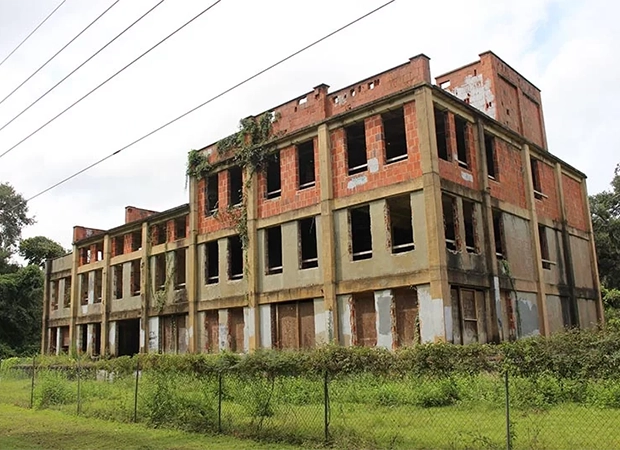
The Seacoast Packing Company stands as a reminder of a once busy trail depot area. Photo by Carmen Pinckney.
Along the way visitors encounter the remains of the Seacoast Packing Company. This building began life as a meat packing plant, with hopes of encouraging farmers to raise livestock. This venture failed almost immediately. It later went on to be used as a grocery warehouse, a tomato canning plant and eventually a pickle packing plant. This building was once surrounded by other structures important to the railroad. Today it is the only remaining reminder of the once busy railroad area.
Visitors can travel through the Charles E. Danner Warehouse along the way. Photo by Carmen Pinckney.
Another reminder of days gone by is the Charles E. Danner & Co. Grocery Warehouse. This remaining brick building was once surrounded by other warehouses at the Port Royal Railroad Depot. Located outside visitors will find a map showing the locations of other businesses that used to grace the depot area.
Plan on spending at least two hours to bike the southern side of the Spanish Moss Trail. Give yourself more time if you’re walking. Be sure to pack supplies for your journey. Make sure to stop along the way to read historic markers and enjoy views from the trestles. If you get tired just take a break on one of the many benches provided. Travels to the other side of Beaufort’s Spanish Moss Trail can be saved for another day.
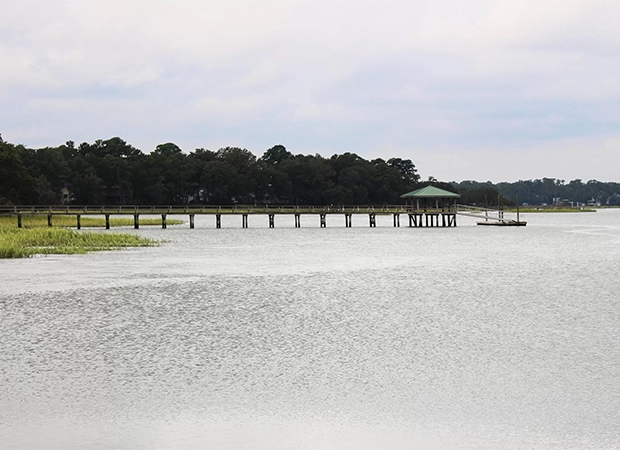
Battery Creek views along the trail are beautiful. Photo by Carmen Pinckney. Photo by Carmen Pinckney.
What is the Spanish Moss Trail in Beaufort, South Carolina?
The Spanish Moss Trail is a 10-mile rails-to-trail greenway in Beaufort County, South Carolina, running along the historic Magnolia Line Railroad between northern Beaufort and Port Royal. The paved 12-foot-wide trail is popular for walking, biking, running, and sightseeing while offering scenic views of Lowcountry marshes, waterways, and wildlife.
Where does the Spanish Moss Trail start and end?
The trail runs between Beaufort and Port Royal in the South Carolina Lowcountry. Multiple access points and trailheads allow visitors to enter along the route, including locations such as the Depot Road Trailhead, Broome Lane Trailhead, and Westvine Trailhead.
How long does it take to explore the Spanish Moss Trail?
Most visitors should plan at least two hours to bike the southern portion of the trail. Walking the same stretch may take longer depending on pace and how often you stop to enjoy scenic overlooks, wildlife viewing, and historical markers along the route.
What activities can you do on the Spanish Moss Trail?
The Spanish Moss Trail is designed for a variety of outdoor activities including walking, running, biking, skating, and fishing from select trestle bridges. Visitors often stop along the way to watch coastal wildlife, photograph marsh views, and explore historic landmarks connected to the old railroad corridor.
Is the Spanish Moss Trail pet-friendly and accessible?
Yes. The Spanish Moss Trail is handicap accessible and welcomes pets as long as they remain on a leash. Doggie bag stations are available along the route, and the paved surface makes it suitable for strollers, wheelchairs, and casual riders.
Are there historical sites along the Spanish Moss Trail?
Yes. The trail passes several historic points of interest tied to Beaufort’s railroad era. Notable remnants include the Seacoast Packing Company building and the Charles E. Danner & Co. Grocery Warehouse, which once stood among a busy depot complex serving the Port Royal Railroad.
Originally written by
Carmen Pinckney
I am the Director of Online Content for the SC Lowcountry Tourism Commission. I enjoy traveling the South Carolina Lowcountry in search of fun and exciting nature-based destinations. The natural beauty found in the area between Charleston and Savannah is my world and I love sharing it with you.
Edited by
Keelie Robinson
As an avid outdoorswoman, I love hiking, camping, kayaking, boating, and traveling. Come along and we’ll explore this region, south of Charleston and north of Savannah, to find what makes the SC Lowcountry NATURALLY AMAZING!
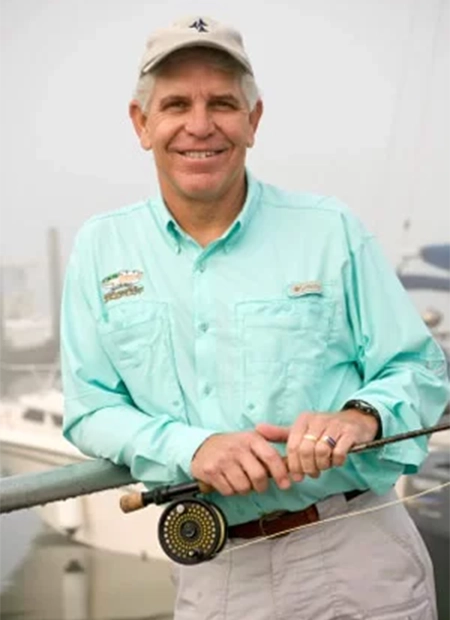
Spending a day on the water in the South Carolina Lowcountry is always a good idea. For years, locals and visitors alike set sail with Hilton Head’s legendary Captain Fuzzy Davis of Silva Dolla Fishing Charters. Though Captain Fuzzy has since retired, his legacy lives on through the many talented fishing charter captains who continue to share a love of the sea and the warm Lowcountry welcome he was known for.
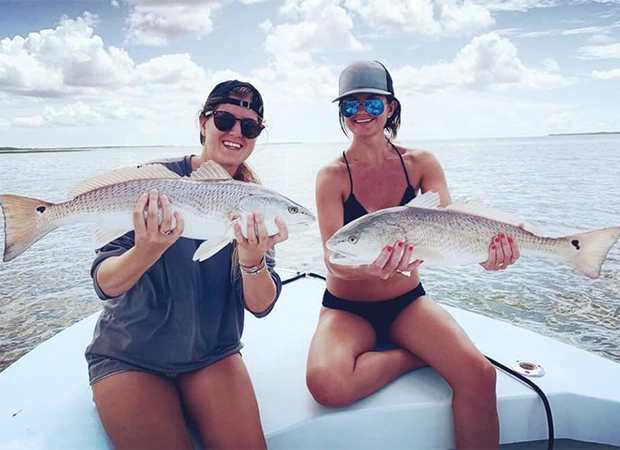
Redfish are plentiful in the waters of the South Carolina Lowcountry.
Davis fished the waters around Hilton Head for over 40 years. Featured in magazines and television shows, he’s held the South Carolina State Tarpon Record since 1986, and Saltwater Sportsman Magazine once ranked him among the “Top 50 Boat Captains in the U.S.”
Captain Fuzzy’s skill on the water and easygoing personality made him a favorite among locals and visitors. He’s the captain my family always called when it was time for a day of fishing.
Captain Fuzzy Davis
Spending a Day on the Water
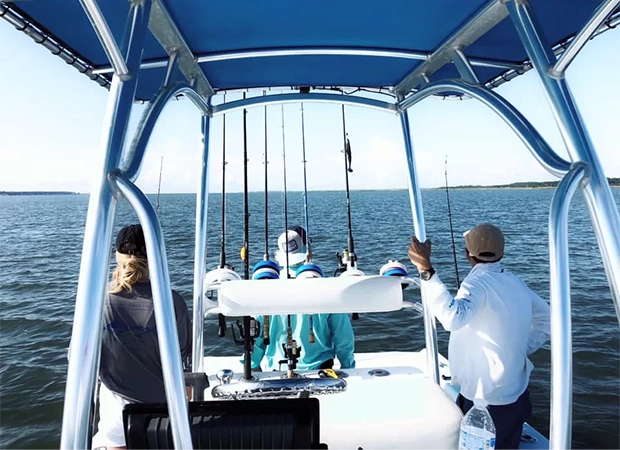
The day begins bright and early at The Boathouse dock, where Captain Fuzzy is ready and waiting. His boat is stocked with ice, bait, tackle, fishing licenses, bottled water, and plenty of fishing trivia to keep you entertained.
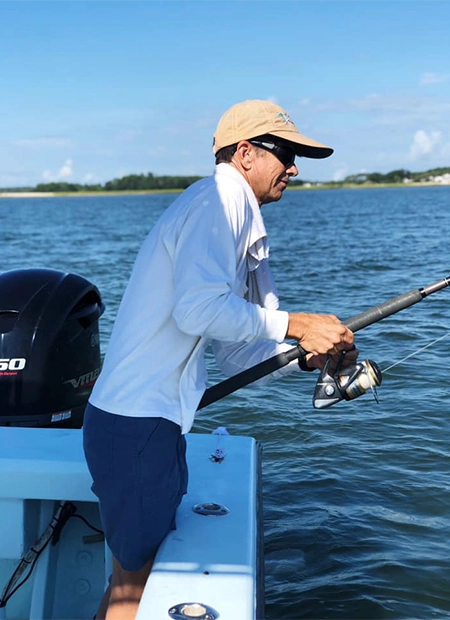
Dad gets in on the action.
After loading up, you’ll head off in pursuit of fish in the saltwater creeks, rivers, sounds, or offshore waters. Inshore excursions often focus on redfish and sea trout, while nearshore trips target tarpon, shark, redfish, trout, and cobia.
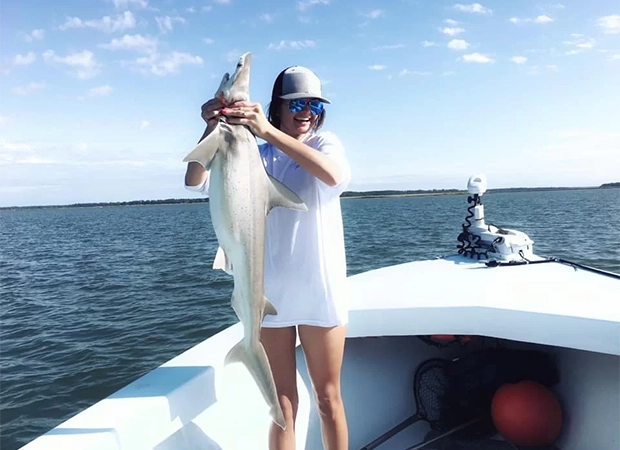
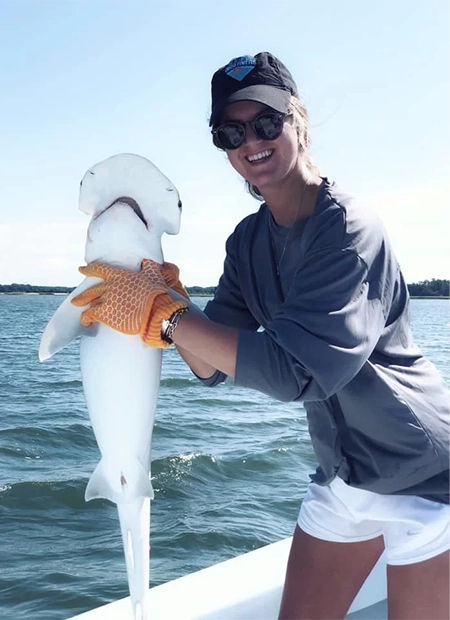
The first catch was a bonnethead shark.
The First Catch of the Day
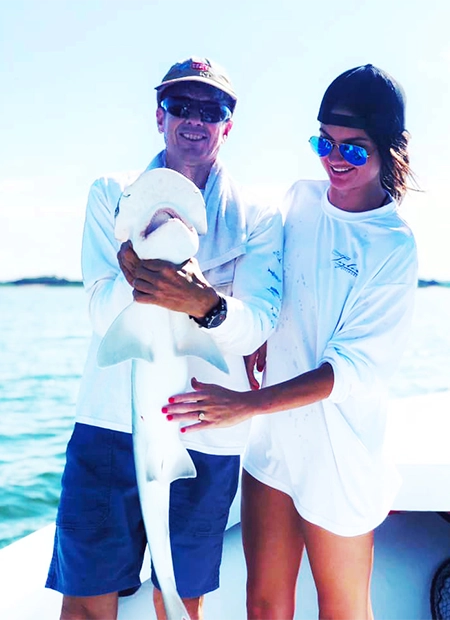
The first catch is always the most exciting. Per Dad’s request, our group started fishing for sharks and it didn’t take long before we were pulling in some beauties. This bonnethead shark put up quite the fight before being hauled on board! Bonnetheads live in subtropical waters from North Carolina to the Caribbean and typically grow between two and five feet long.
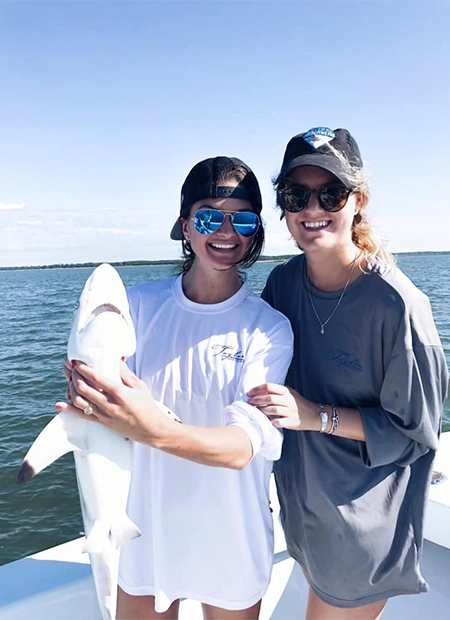
Dad and Charlotte with a Bonnethead
The proud catch!
The girls with a Blacktip Shark
After some thrilling shark fishing, we turned our attention to redfish. The girls each hooked a prize, but the contest couldn’t be settled. One fish was longer and the other heavier, leaving the score tied and the bragging rights out on the water.
Catching redfish brings out friendly competition.
After four hours battling sharks, stingrays, and redfish, we pulled into the dock exhausted yet elated, hearts full of memories, family ties strengthened and plans for the next adventure already forming.
The team heads home after a day of fishing.
A Legacy That Lives On
Though Captain Fuzzy has since hung up his captain’s hat, his legacy lives on through the many fishing charter captains who continue to share a passion for the Lowcountry’s waters, creating unforgettable experiences for anglers of all skill levels.
Whether you’re reeling in a trophy catch or soaking in the scenery, a charter fishing trip in the South Carolina Lowcountry is more than just a day on the water, it’s a story that becomes part of your own.
Plan Your Trip
Ready to cast your line in the South Carolina Lowcountry? Explore our full list of local fishing charters in the South Carolina Lowcountry and start planning your next adventure on the water.
Frequently Asked Questions About Charter Fishing in the Lowcountry
What can I expect when charter fishing in the South Carolina Lowcountry?
Expect a day filled with sunshine, salt air, and plenty of action. Depending on your trip, you might reel in redfish, sea trout, sharks, cobia, or even tarpon, all while exploring the scenic creeks and waterways around the South Carolina Lowcountry.
Can families go on a charter together?
Absolutely! Many charters offer family-friendly trips that accommodate kids and adults, making for a memorable day on the water for all ages.
Do I need experience to go on a fishing charter?
Not at all! Charters welcome anglers of all skill levels, from first-timers to seasoned pros. The captain and crew will provide guidance and tips to help make your day successful and enjoyable.
Do I need a fishing license for a Lowcountry charter?
Yes! All anglers are required to have a valid South Carolina fishing license. Many charter services provide licenses as part of the trip but confirm with your captain beforehand to be prepared.
What should I bring on my fishing charter?
Bring non-aerosol sunscreen, a hat, polarized sunglasses, a camera, and a small cooler for drinks or snacks (unless otherwise provided). Most charters supply bait, tackle, and fishing licenses.
What’s the best time of year for a fishing charter?
The Lowcountry offers year-round fishing opportunities. Inshore trips for redfish and sea trout are popular in spring and fall, while nearshore excursions targeting tarpon and sharks peak during warmer months.
Originally written by
Carmen Pinckney
I am the Director of Online Content for the SC Lowcountry Tourism Commission. I enjoy traveling the South Carolina Lowcountry in search of fun and exciting nature-based destinations. The natural beauty found in the area between Charleston and Savannah is my world and I love sharing it with you.
Edited by
Keelie Robinson
As an avid outdoorswoman, I love hiking, camping, kayaking, boating, and traveling. Come along and we’ll explore this region, south of Charleston and north of Savannah, to find what makes the SC Lowcountry NATURALLY AMAZING!
Robert grew up behind this house on Beaufort’s Prince Street. Image from Wikimedia.
Robert Smalls was born into slavery on April 5, 1839. Robert and his mother lived in a two-room shack behind 511 Prince Street in Beaufort. Robert was treated very well by his owners, Henry and Jane McKee, for it was rumored that Mr. McKee was Robert’s father.
Young Robert Smalls Image from navymemorial.org.
Early Years
At the request of his mother, twelve-year-old Robert was sent to Charleston and hired out as a laborer. Most of his earnings were returned to his owner, but he could keep $1 per week for himself. He first worked in a hotel and as a lamplighter. His love of the ocean led him to find work on the docks. He began as a longshoreman and worked his way up to wheelman. His experience gave him great knowledge of ships and the Charleston harbor. Robert married Hannah Jones in 1856 and started a family. He was only 17. After a time, his goal was to purchase their freedom, but the price was very steep for someone of his circumstance.
Robert Smalls, Pilot of the Steamboat Planter Image from US Naval History and Heritage Command.
During the Civil War
The Civil War began with the Battle of Fort Sumter in April of 1861. The well-respected Robert was assigned to steer the CCS Planter, a Confederate military transport.
He piloted the Planter along the coast from South Carolina to Florida. Robert and the slave labor crew of the Planter were aware of the Federal blockade line just past the Charleston harbor.
In April of 1862, Robert began planning an escape. The following month, the Planter picked up four large guns that were bound for the Charleston harbor. They also took on 200 pounds of ammunition. The families of the crew were stationed nearby.
On the evening of May 12th, Robert and the rest of the crew were left unattended on the Planter. Smalls and seven of the eight slave crewmen escaped to the Union blockade. Smalls put on the captain’s uniform and straw hat. He sailed the Planter past the Southern Wharf and proceeded to pick up his wife, children and the families of other crewmen.
Robert guided the Planter past the Charleston harbor and Fort Sumter. He and his crew expertly headed straight for the Union Navy fleet. They replaced the Rebel flags with a white bedsheet. He surrendered the Planter and her cargo to the US Navy. Robert was just 23 years old.
Robert Smalls, captain of the gunboat Planter, which was run out of Charleston in May 1862. Photograph from Library of Congress.
He quickly became known for his heroic actions. He joined the US Navy and earned much fame as a pilot. Word of his exploits was published throughout the north. He was then promoted and made the captain of the Planter.
Image from socialstudiesforkids.com.
In 1864 Robert was voted an unofficial delegate to the Republican National Convention. He also spent time in Philadelphia. While there he learned to read and write and became a supporter of the Port Royal Experiment.
This was an effort to raise money to support the education of former slaves. It brought doctors and teachers to assist the former slaves into a new way of life. It also led to the founding of the Penn School.
Yours truly Robert Smalls Image from National Portrait Gallery Smithsonian Institute.
In December of 1864, Robert and the Planter made their way to Savannah while Sherman Marched to the Sea. In 1865 Robert sailed the Planter to the Charleston harbor where the American flag was returned to Fort Sumter.
After this ceremonial act, Robert retired from military life. He continued to pilot the Planter, but his missions turned humanitarian. He took food and supplies to freedmen as a member of the Freedmen’s Bureau.
Robert Smalls House 511 Prince Street Photo by Carmen Pinckney.
Back in Beaufort
Upon his return to Beaufort, Robert purchased the house where he was formerly a slave. One day, his previous owner Jane McKee, suffering from dementia, walked back to the house she had loved on Prince Street. Robert greeted her, brought her inside, cared for her and allowed her to remain there until her death.
Image from historymugs.us.
Robert went on to become a successful businessman and politician. He had a distinguished career of public service including serving in the South Carolina House of Representatives, the United States Senate, and four terms in the United States House of Representatives. Smalls also served as a major general in the state militia and later served as Port Collector for Beaufort.
Image found on owlcation.com from public domain.
In 1915, at the age of 75, Robert died of malaria and diabetes. He was buried in the Tabernacle Baptist Churchyard in downtown Beaufort. A monument to Robert proudly stands beside the church. It is inscribed: “My race needs no special defense, for the past history of them in this country proves them to be the equal of any people anywhere. All they need is an equal chance in the battle of life.” He made this statement to the South Carolina legislature in 1895.
Tabernacle Baptist Church Image by Carmen Pinckney.
Robert Smalls’ Legacy
Built in 1840, the Tabernacle Baptist Church was originally used as a meetinghouse and lecture room. In 1863, a 500 member African American congregation acquired the building and turned it into the church that is still in use today. This historic church and the Robert Smalls memorial statue are located at 901 Craven Street in historic downtown Beaufort.
This bust of Robert Smalls is positioned proudly beside the Tabernacle Baptist Church in downtown Beaufort. Image by Carmen Pinckney.
The astonishing true story of Robert Smalls’ journey from slave to Union hero and ultimately United States Congressman can be found in the book Be Free or Die. If you would like a copy, the Frampton Plantation gift shop keeps it in stock.
Be Free or Die tells the amazing story of Robert Smalls’ escape from slavery to union hero.
Giant oyster shells have popped up like daisies throughout historic Bluffton. The Shell Art Trail is a fun public art trail that both entertains and educates. The cultural exhibit has 21 giant oyster shells placed throughout Bluffton. The shells have been uniquely painted by local artists. While hunting for shells, you will learn interesting oyster facts along the way.
The Shell Art Trail
First things first – download and print your Shell Art Trail Passbook. Review the map and plan your route. The passbook includes a map and questions that can be answered by reading the fact plaques located at each sculpture.
Spend a day roaming around downtown Bluffton in search of these beautiful sculptures, all of which contain interesting facts about oysters. Questions can be found on the back of the shell art passbook. Each can be answered by reading the plaque attached to each shell.
Be sure to take plenty of pictures along the way.
Tag @LowcountryOysterTrail, and use #LowCountryOysterTrail
#HEARTofBluffton #SeeShellsinBluffton while completing the trail!
After the shell hunt, head into one of the wonderful restaurants for lunch. The Sugaree makes the best chicken salad BLT and bagel chips.
After lunch be sure to head into some of the unique shopping opportunities downtown Bluffton has to offer.
Visit downtown Beaufort’s historic John Mark Verdier House Museum for a step back in time. The impressive Federal-style mansion was built around 1804 by John Mark Verdier, a successful merchant and planter.
Verdier acquired significant wealth by trading indigo. He then purchased over 1,000 acres which he used to grow sea island cotton. The house on Bay Street was a highly visible statement of his wealth and status as a member of Beaufort’s planter class.
The John Mark Verdier House Museum
This museum is a wonderfully engaging attraction for many reasons. As the only historic planter’s house in the city open to the public, the 1804 estate presents an accurate portrait of how Beaufort’s wealthiest citizens lived during the height of the pre-Civil War Antebellum period when cotton was king and wealth was everything. The house has an impressive wide interior and four elaborate hand-carved fireplaces.
The house has seen some very important visitors. The Marquis de Lafayette stopped here on his Southern Tour in 1825. It was also used as Federal Headquarters by Union troops during the occupation of Beaufort during the Civil War. It was even home to the first telephone in Beaufort!
Luckily the Verdier House, or Lafayette House as it was called then, was protected and remained in family hands until the 1940s. A group of visionary citizens rallied to save the house from demolition. This group evolved into the Historic Beaufort Foundation. They worked diligently to register the house as a National Historic Landmark in 1971. They went on to open it as a museum in 1976.
The Verdier House Today
The Verdier House has withstood time and factors that erased many other grand buildings from the area. The home was spared flame during the Civil War and held fast during devastating hurricanes.
This is in part to innovative shipbuilding techniques that used beams and hand-cut horizontal boards. Visitors will also notice the house does not include a kitchen, bathrooms or closets. While the house was maintained by the family, it was never updated; keeping it true to the period of construction. The kitchens and privy would have been located outside. Clothing was stored in trunks and wardrobes.
The John Mark Verdier House Museum also houses three permanent exhibits highlighting Robert Smalls, the First African American to serve in the U.S. Congress 1875 – 1886, Civil War photos by Samuel Cooley, and The Beaufort Volunteer Artillery.
Docent-guided tours are available every hour on the ½ hour from 10:30 a.m. until 3:30 p.m. The museum is closed on Sundays and holidays. Visitors are invited to visit and admire the house and its exhibits. For more information visit the Historic Beaufort Foundation, or call the museum at 843-379-6335.
A black metal fence protects the Old Sheldon Church Ruins. Photo by Carmen Pinckney.
One of the lowcountry’s most photographed sites gained several feet of protection. In an effort to preserve and protect the Old Sheldon Church, a locked fence has been placed around the ruins. Visitors can still visit the site but cannot pass through the iconic columns and brick arches.
A locked gate secures the ruins. Photo by Carmen Pinckney.
The church is owned by the Parish Church of St. Helena. They have been researching ways to preserve the ruins from rapid decay. The historic structure has fallen victim to vandalism by way of desecrating tombstones, graffiti, brick removal and destruction.
The Parish Church of St. Helena has plans to bring in docents on site to lead tours through the beautiful ruins. Restoration work will shortly begin first. Walking paths will be placed within the interior portion of the ruins. Walking through the brick archways will only be possible with professional supervision to ensure damage is not done to the structure.
The new fence is simulated to resemble iron. Photo by Carmen Pinckney.
This early example of Greek Revival stands as a testament to master craftsmanship and has had a very interesting life. The South Carolina Picture Project wrote a great article about its storied past. A tablet located on the grounds reads: “Church of Prince William’s Parish, known as Sheldon, built between 1745-1755. Burned by the British Army 1779. Rebuilt 1826. Burned by the Federal Army 1865. Another sign states: “Old Sheldon is not a recreational area or playground.”
As visitors to this site we must respect this sacred and historically significant lowcountry gem. We must also understand, and not be offended by the fence. Protecting this structure for future generations is critical. The efforts of St. Helena should be applauded and appreciated.
History abounds from start to finish. Take a day trip to visit the historic sites on this scenic island road.
Tabby walls of St. Helena Chapel of Ease Ruins. Photo by Carmen Pinckney.
St. Helena is home to many beautiful roads. A turn onto Lands End Road puts you right in the heart of the Penn Center. This historically significant landmark is the site of the former Penn School, one of the first educational sites for formally enslaved individuals. Their website says it best, “Opened in 1862 the Penn School tutored freedmen out of slavery and into freedom. After the school closed in 1948, Penn became the first African American site in the state whose primary purpose was to safeguard the heritage of the Gullah Geechie community.
Photo by Carmen Pinckney.
Later, in the 1960’s, Penn Center took up the mantle of social justice by ushering in the Civil Rights Movement and serving as the only location in South Carolina where interracial groups, such as Dr. Martin L. King, Jr., and the Southern Christian Leadership Conference and the Peace Corps could have safe sanctuary in an era of mandated segregation.
Penn Center continues to thrive as a national monument promoting historic preservation, as well as a catalyst for economic sustainability throughout the Sea Islands. Its far-reaching impact on local, national and international communities has been the greatest legacy of the Penn Center’s history.”
Brick Church – Photo Credit: Bill Fitzpatrick
The oldest building on the site is the Brick Church. Built in 1855, Brick Church was an early location of the first school.
When visiting the Penn Center your first stop should be the Courtney P. Siceloff Welcome Center and Gift Shop in the York W. Bailey Museum. The museum is open Tuesday-Saturday, 9 a.m. to 4 p.m.
St. Helena Chapel of Ease. Photo by Carmen Pinckney.
As you travel further down Lands End Road you will find the St. Helena Parish Chapel of Ease Ruins. This tabby house of worship was built in the mid-1700s for the plantation families that lived on the sea island. Because the island was occupied by Union troops during the Civil War, the plantation families abandoned their homes and the church was used by the abandoned slaves of the island. It was used by Northerners who came south to educate and train freemen. It was also used as a sanctuary by Methodist freemen as early as 1868. A forest fire destroyed the structure in 1886 and it was left in disrepair.
Fripp Tomb at St. Helena Chapel of Ease. Photo by Carmen Pinckney.
The church ruins are surrounded by ancient oaks, dripping in Spanish moss. It also has a cemetery, containing a tomb containing Fripp family members. This is a great spot to take pictures and reflect on the splendor of this historic site. The SC Picture Project has a great article about the chapel of ease ruins with many beautiful pictures.
Fort Fremont Historical Preserve photo by Carmen Pinckney.
Standing sentry at the end of Lands End Road is the Fort Fremont Historical Park. Built in 1898, this fort was one of six fortifications designed to protect the coast during the Spanish American War. Long abandoned, the site now sits in beautiful ruins. Surrounded by live oaks, the fort looks out over Port Royal Sound with 900 feet of beach access.
One of the spots where a breech-loaded disappearing cannon was positioned. Photo by Carmen Pinckney.
Visible now are the recessed spots where disappearing cannons were positioned. Fort Fremont was officially deactivated in 1912 when the Port Royal Naval Station moved from Parris Island to Charleston. The property went into private hands for several years. While the hospital was transformed into a hunting and fishing lodge, the fort fell into disrepair. They were both listed on the National Register of Historic Places. In 2004 the fort and 15 acres were purchased transform the ruins into a public park.
The ancient walls of Fort Fremont. Photo by Carmen Pinckney.
Visitors can roam through the preserve and view the fort from all angles. According to the Fort Fremont Historical Preserve, “Ft. Fremont serves as a historical remnant of military defense technology at the dawn of the 20th century as the U.S. became a major world power.”
Staircase leading to the top of the fort. Photo by Carmen Pinckney.
Fort Fremont is open for touring during daylight hours. You can also access and walk along the beach through the fort property. The full history of Fort Fremont can be found on their website.
If you are looking for a dog-friendly beach adventure that aims to please, look to Fripp Island. This easternmost barrier island in South Carolina is located at the end of Highway 21 in Beaufort County. Just a stone’s throw from Hunting Island State Park, Fripp provides private island vacationing (and living) at its finest. Amenities abound and nature delights. If your furry friend is a part of your vacation plans, this is the destination for you.
Photo by Carmen Pinckney.
Vacation rentals range from tennis villas and golf cottages to beachfront homes. My party included two and a dog, so the tennis villas were perfect for us. Positioned between the canal and the courts, with the Beach Club across the street, everything we needed was in sight.
Photo by Carmen Pinckney.
The best way to move around Fripp is by golf cart. Check when picking a rental to see if you have a golf cart and amenities cards included. If not, you can rent one at Island Excursions (located at the marina). Bikes and scooters are also available. Most beach access points have golf cart parking. You simply load your beach supplies and cooler onto your cart and head out for a day on the ocean.
Unpack, pick up your golf cart and head to the beach. If taking your dog, you might want to start off at a more isolated beach. Follow Tarpon Blvd (the main road) to the end to find the perfect spot to introduce your furry friend to the ocean. This beach overlooks Pritchard’s Island which is only accessible by boat. Kayak trips across are a fun way to explore this island. Keep in mind, the sand gets very hot, so limit dog access to the beach to morning and evening excursions.
Photo by Carmen Pinckney.
Another thing to consider is introducing your dog to the presence of deer. They are everywhere! They roam the island freely and have grown accustomed to visitors. Keep in mind, they are wild animals and should not be fed or bothered. To round out the end of the day, have a drink and enjoy the music at the Sandbar (located at the Beach Club).
Photo by Carmen Pinckney.
If your trip includes amenities cards, you can enjoy the restaurants and pools at the Marina, Beach Club and Cabana Club. The restaurant at the Cabana Club offers great fish tacos and pina coladas. The Bonito Boathouse is a great choice for dinner. The staff is pleasant, the views are breath-taking, and the food is very tasty.
Resort amenities offer an unmatched variety of sports and leisure activities on Fripp. Amenities include: activity center and programs, pools, racquet club, dining & restaurants, shopping, island excursions, marina and Camp Fripp. For the golfers, you have two spectacular courses to chose from. There are also fun things to do in the Beaufort area. Visit Fripp Island Golf and Beach Resort’s Ultimate Vacation Guide or more ideas.
Photo by Carmen Pinckney.
Fripp features 3.5 miles of spectacular, uncrowded white sandy beaches flanked by towering Palmetto trees, just waiting for you to enjoy. Check out the FRIPP ISLAND MAP to find great access points to the beautiful beach. All beach access points are numbered, so if you plan on an evening stroll on the beach, pay attention to your access point number so you can find your way back at the end of the walk.
Photo by Carmen Pinckney.
The island is covered in miles of walking trails along the roadways and through the forest and marsh. Designated as a wildlife sanctuary, Fripp hosts many species of birds, along with wildlife including deer, turtles, alligators and raccoons. There is an Audubon Trail located on Porpoise Drive. The trail goes through the maritime forest and ends at the marsh of the Fripp Inlet. Educational signs and benches are placed along the trail.
For a relaxing and fun beach week, consider planning a trip to Fripp Island. For more information click on the following websites: FRIPPISLANDRESORT.COM or FRIPPISLANDLIVING.COM.
See what our visitors love about the
SOUTH CAROLINA LOWCOUNTRY
Use the #hashtag #sclowcountry to get your image featured!
The Lowcountry & Resort Islands Region of South Carolina includes the four, southern-most counties in the state, Beaufort, Jasper, Hampton, and Colleton, which are bordered on the east by the Atlantic Ocean and on the west by the Savannah River and the state of Georgia.
So happy that “Clouds Gather” has found its forever home. 💖 I hope this painting brings joy and memories of happy times to the new owners. #partagergallerygiftsandhome #acrylicpainting #SCLowcountry #southcarolina
This painting conveys a moment I captured of our son during one of our family beach walks, as we looked for nature’s treasures at low tide. He had broken his arm at the beginning of summer and wasn’t able to participate in his favorite summer activities such as sports and jumping waves in the ocean. As a parent, it was difficult watching him miss out, but I was constantly amazed at his positivity and resilience. Watching him in this moment made me think about how we are always searching and the many places our life’s journey takes us.
Discover at your own leisure at the coastaldiscoverymuseum 🌳 From century-old buildings with storied pasts, to wooden boardwalks that stretch into the Jarvis Creek salt marsh, there`s always something to explore!
Details ✨ • I love the perspective of this first shot. I know the angle isn’t a normal view, if you had this hung in your house, but I just think it’s so badass and cool and it’s my account so I can post it and y’all will just have to deal 😆😜. But really, thanks for all the love you’ve shown me on this piece so far. I’m really proud of it and can’t wait to make more versions of this design. 💙🌾 • Fiber sources tagged 🌊
Spanish moss drapes the live oak trees that are ubiquitous to the Edisto Island area. Did you know that Edisto gets its name from the native Edistow people? The Edistow Native Americans were a sub tribe of the Cusabo indians, a group of Native Americans who lived along the Atlantic coast in South Carolina.
⏰ Best time of the day to visit: Stop by mid-morning. That way you can explore the island, grab lunch, and stay for the amazing sunset if you choose.
🏖️ Things to do while there: Edisto Environmental Learning Center, Boneyard Beach, Scott Creek Inlet, Big Bay Creek, SeaCow Eatery.
☀️ Things to visit in the area: Jungle Road Park, Bay Creek Park, Otter Islands, Spanish Mount Point.
📆 Best time of the year to visit: For warmer weather come anywhere from March-August.
🏨 Where to stay: Fripp Island Golf & Beach Resort (frippislandrsrt), Seabrook Island Club (seabrook_sc), The Sanctuary at Kiawah Island Golf Resort (kiawahresort), Charleston Kiawah Island/Andell Inn (andellinn).
A visitor takes a leisurely stroke under a canopy of live oaks draped with Spanish moss in the Palmetto Bluff (palmettobluff) neighborhood of Bluffton, South Carolina. Palmetto Bluff is a picturesque community that sits in the heart of Lowcountry. Nestled along the May River, it’s abundant with beautiful walking trails, historic sites, and stunning views.
⏰ Best time of the day to visit: There is no wrong time to visit Palmetto Bluff. However, we highly recommend sticking around for one of their spectacular sunsets.
🛶 Things to do while there: Stop by Cole’s for some regionally inspired Southern fare, paddle board, kayak, or canoe along the May River, go saltwater fishing, take a tour at Bluffton Jack`s Old Town Tours.
🌊 Things to visit in the area: Palmetto Bluff Conservancy, Old Town Bluffton, Bluffton Oyster Factory Park, May River Sandbar, Heyward House Museum and Welcome Center (heywardhouse).
📆 Best time of the year to visit: For the best weather, we recommend visiting between March and May or from September to November.
🏨 Where to stay: The Montage Palmetto Bluff Resort (montagepalmettobluff) is the only resort in Palmetto Bluff. However, there are plenty of places to stay in the surrounding areas including: Old Town Bluffton Inn (oldtownblufftoninn), The Inn & Club at Harbour Town (theinnandclubatharbourtown), Sonesta Resort Hilton Head Island (sonestahhi).
Isn`t this live oak tree tunnel beautiful? Live oak, draped in Spanish moss, is emblematic of South Carolina and many of the Southern states. We love these iconic trees, not only for their beauty, but their history as well. The average lifespan of a live oak is 300 years!
The shore gently recedes beneath the stunning Pawleys Island Pier. The unique island town, located about 25 miles south of Myrtle Beach and 70 miles north of Charleston, exudes laid-back, beachy vibes. Locals have definitely adopted an island state of mind and encourage visitors to as well. When you go, make sure to relax on the beach, explore the famous sand dunes, or fish in one of the many adjacent creeks.
⏰ Best time of the day to visit: We guarantee that you’re going to want to spend a whole day here. We recommend getting to the beach at around 10am.
🗓️ Best time of the year: Pawleys Island has the best weather during the spring and early summer months.
🏖️ Things to do while there: Pawleys Island Nature Park, Pawleys Island Chapel, Hopsewee Plantation.
🐠 Things to visit in the area: Brookgreen Gardens (brookgreen_gardens), take a walking ghost tour, Myrtle Beach (mymyrtlebeach), Harborwalk Marina, South Carolina Maritime Museum (southcarolinamaritimemuseum).
🏨 Where to stay: The Oceanfront Litchfield Inn (oceanfrontlitchfieldinn), Litchfield Beach and Golf Resort (litchfieldbeachandgolf), Sea View Inn (seaviewinn), 620 Prince (620prince).
Pregnancy sleep = 😫. Silver lining, a sunrise walk with Sullie and Zoey. _ Anyone else deal with terrible sleep in the third trimester? It`s been brutal. Combo of overall anxiety/mind racing, digestion discomfort and having to pee all the time! 😐 _ #sunrise #follybeach #sclowcountry #scbeaches #goldenretrievers #goldensofinstagram #charleston #29weekspregnant #thirdtrimester #pregnancylife #pregnancyproblems #beach #beachsunrise
Angel Oak, Johns Island, South Carolina. ⠀ ⠀ The Angel Oak Tree is a Southern live oak (Quercus virginiana) located in Angel Oak Park on Johns Island near Charleston, South Carolina. The Angel Oak Tree is estimated to be at least 400 and possibly up to 1400 years old It stands 66.5 ft (20 m) tall, measures 28 ft (8.5 m) in circumference, and produces shade that covers 17,200 square feet (1,600 m2). Its longest branch distance is 187 ft. in length. ⠀ ⠀ #angeloak #angeloaktree #southcarolina #johnsisland #charleston #DiscoverSC #lowcountry #SCLowcountry #lowcountrylife #igerssouthcarolina #blackandwhite #b&w #oaktree #legacyoak #blackandwhite #blackandwhitephotography #totravelistolive #travel_captures #travellove #travelpics #travelpic #travelbug #travelandlife #lifeisajourney #adventuroussoul
The South Carolina Lowcountry Guidebook is filled with many things to see and do in the beautiful Lowcountry of South Carolina. Please fill out the information and we will send you a FREE GUIDE BOOK.